
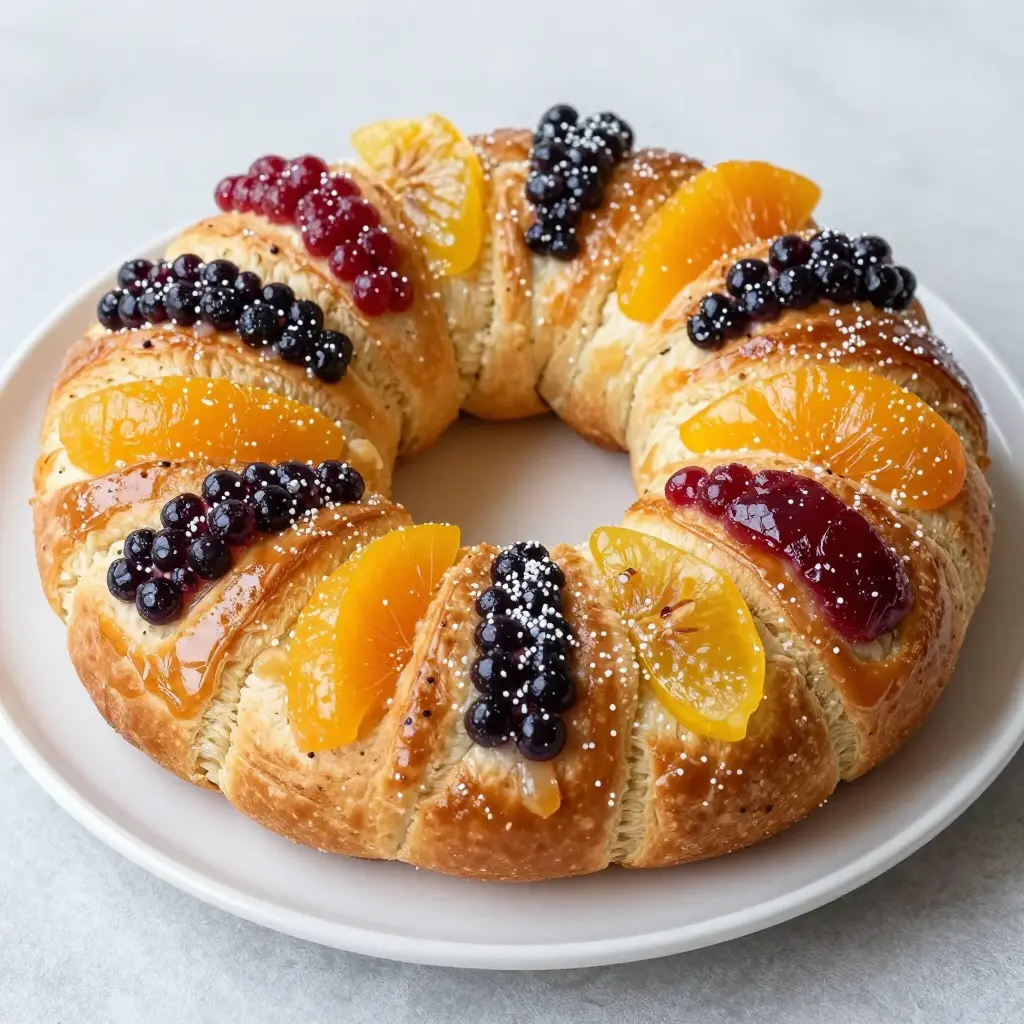
Why a Rosca’s Freshness Shows Before the First Bite
If you are searching for a Rosca near me, here is the one thing to understand first: much of what you need to know about a Rosca de Reyes is visible before you taste it. A fresh loaf looks a certain way, and two details on the surface do most of the talking – the crust and the candied fruit on top.
Crust shine is the gloss across the dome of the bread. It comes from the egg wash and sugar glaze brushed on before baking, so an even sheen usually means the loaf was finished with care. Candied fruit spacing is how the strips of candied fruit and sugar paste are arranged around the ring, and an even, deliberate placement points to a loaf shaped and decorated by hand.
Used together, the two cues give you a quick read on a loaf. This article explains what each one tells you and how to weigh them when you are choosing a Rosca nearby. For a fuller rundown of what to look for before you buy, our Rosca near me guide walks through the details step by step.
What Crust Shine Reveals About the Bake Hour
Run your finger along the top of a Rosca de Reyes and you can feel how fresh the surface is. The crust is not just decoration – it reflects how the loaf was baked and how long it has sat.
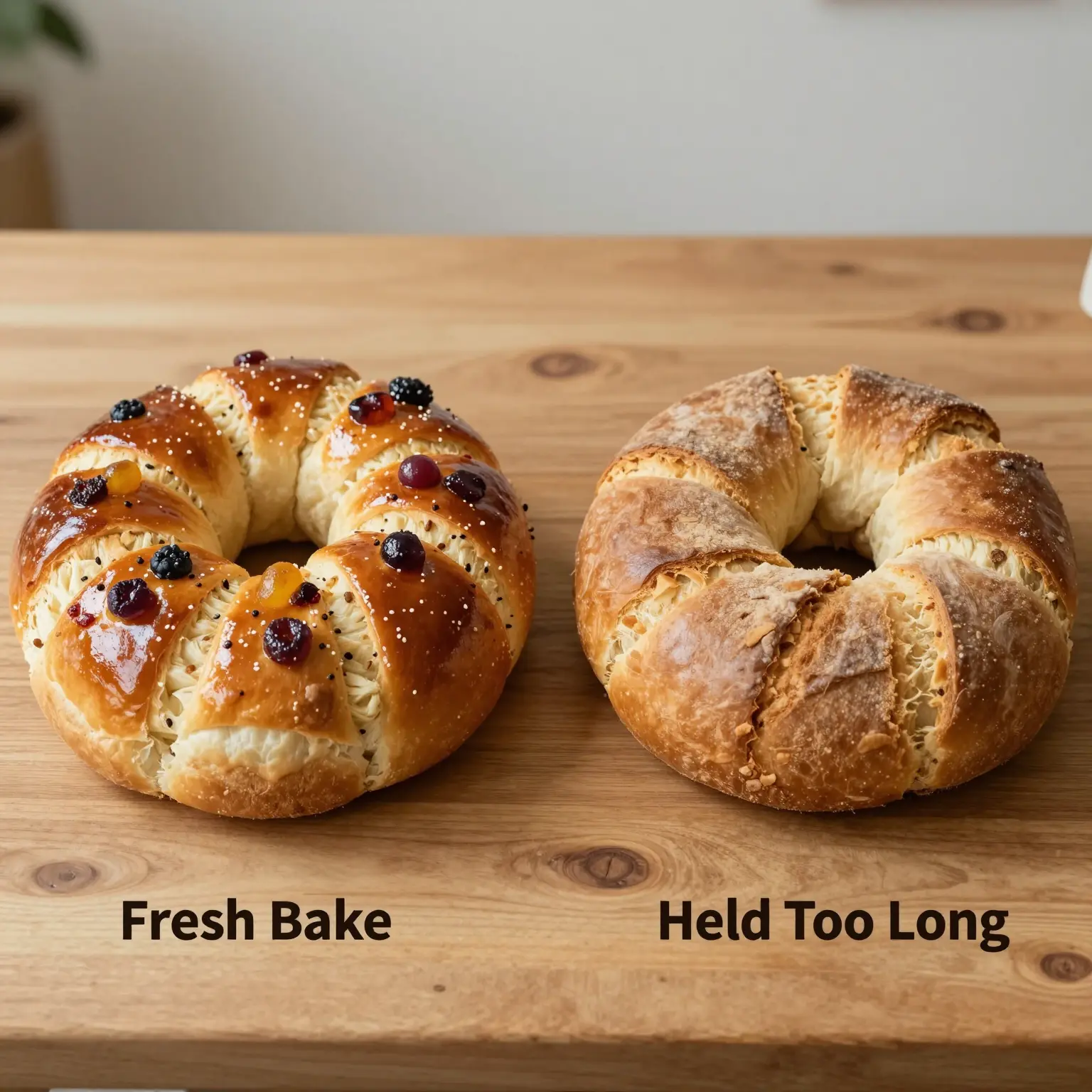
Crust shine is the glossy finish left by an egg wash and a sugar glaze under controlled oven heat, and it says more about freshness than any topping. When the wash and the heat are right, the crust sets into a thin, reflective shell. Leave the bread out, or bake it too cool, and that sheen fades to a flat matte.
The baking science, in plain terms
An egg wash – yolk, sometimes with a touch of milk or sugar – lays a film of proteins and sugars across the dough, and a sugar glaze adds a second layer that browns in the oven. In a steamy oven the surface dries slowly, so the wash browns evenly instead of scorching. The result is a smooth, continuous glaze that holds moisture in and throws back the light.
Reading the shine like a baker
A bright, mirror-like sheen tells you the loaf left the oven recently and baked evenly from edge to center. The gloss is still smooth and unbroken.
A dull, matte, or flaking top says the opposite. The glaze has drawn moisture from the crumb and the surface has dried out, so it no longer reflects light. That is what happens to a Rosca baked hours earlier, or to one held too long in a case or a bag.
So when you are trying to find a fresh Rosca de Reyes near you, let your eyes do the first check. Does the crust reflect the light or absorb it? Reflection means a recent bake; absorption means the loaf has been sitting. Shine is the most honest freshness cue a loaf can offer.
The Crust Shine Timeline: Reading the Bake Hour at a Glance
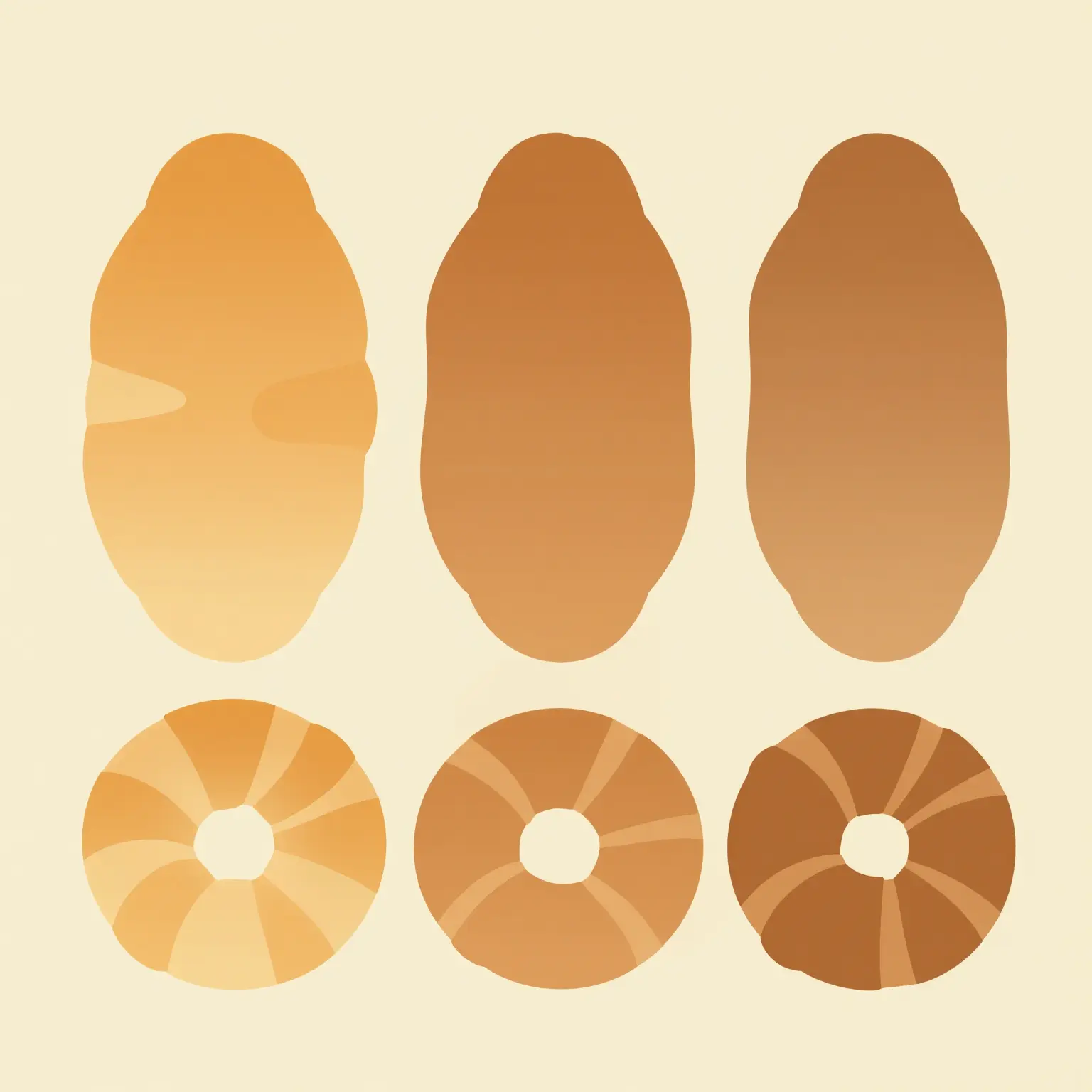
Here is what happens to the crust as a loaf sits on the shelf. The three stages below are a quick visual primer for anyone scanning loaves on a tray.
What Each Stage Tells You
- Stage one – high gloss: A fresh, just-baked crust carries a thin, mirror-like sheen. Light glides across the surface in a smooth gradient, and that glow usually signals a Rosca pulled from the oven within the first hour.
- Stage two – mid-tone matte: As the loaf sits, the glaze sinks in and moisture migrates outward. The shine softens into an even, velvety matte that still catches a little ambient light.
- Stage three – dry dull: Hours later, the surface turns flat and slightly chalky. The crust has no reflective pop left, which is your clearest cue that the bake hour was a long while ago.
Think of the three states as a rough ruler you can hold up to any tray. If you want to see what an early-hour sheen looks like on a finished loaf, browse a fresh Rosca near you and compare it against this sequence.
What Candied Fruit Spacing Tells You
If crust shine is the first thing a baker checks, candied fruit spacing is the second. Together they hint at the bake hour – roughly how long ago the loaf left the oven and began its short countdown to your table.
Spacing is mostly about handwork. When strips of sugar paste and glacéed fruit are laid down at even intervals across the top of the dough, each piece sits proud of the surface with a lightly caramelized edge. That geometry does not happen by accident: the baker assembled the loaf with care and finished it close to the hour you are buying it. Fresh paste holds its shape and stands tall instead of slumping, and the fruit keeps its color because it has not sat long enough to weep into the crust.
Time changes the picture. As a Rosca rests, the fruit settles, its sugars bleed a faint stain into the surrounding dough, and the neat intervals drift – one cluster sliding toward the center, a gap opening where a piece once stood. None of that is a flaw in flavor, but it is a rough clock. Sunken, unevenly spread fruit usually means the loaf was decorated or baked at a different hour, or that it rested too long before reaching the shelf.
The point is simple. Even spacing and fruit that sits proud and crisp suggest a careful, recent bake. Blurred intervals and dull, settled color point to an older one. So when you search for a Rosca near me, use both cues – shine and spacing – and pick the loaf that was decorated this morning, not last night.
Reading a Rosca takes seconds: two cues do most of the work. Crust shine and candied fruit spacing tell you more about the bake hour than any label, so keep this quick-reference guide handy the next time you are hunting for a Rosca near me.
| Cue | Fresh Bake (Early Hour) | Mid-Day Bake | Held / Older Bake |
|---|---|---|---|
| Crust Shine | High lacquered gloss, wet-mirror bright | Semi-matte sheen with soft highlights | Dull, dry, and chalky |
| Candied Fruit Spacing | Tightly nestled, fruit nearly touching | Slightly spread, small even gaps | Widely spaced, gaps gaping at the edge |
| Aroma | Warm, yeasty, citrus-and-sugar bloom | Muted sweetness, faint butter | Stale, dusty, or flat |
| Crumb Texture | Springy, tender, and lightly moist | Firm yet soft, gently set | Dense, dry, or crumbly |
| Sugar Paste Strips | Glossy, pliable, faintly tacky | Matte, firm, and well-set | Cracked, brittle, lifting at the edges |
How to Judge Quality When You Search Rosca Near Me
When you type “Rosca near me” into your phone, you are usually standing in a parking lot, deciding fast. A fresh Rosca de Reyes gives its quality away within seconds. You just need to know what to look at, and in what order.
Start With the Surface: Shine, Then Spacing
The first cue is crust shine. A properly baked Rosca de Reyes wears a deep, lacquered glow, the mark of an egg wash and sugar glaze that browned at the right temperature. A dull, matte top usually means the loaf came out of the oven hours ago, or baked too cool. Shine is your fastest freshness signal.
Candied fruit spacing comes next. On a well-made loaf, the strips of citron, cherry, and fig sit evenly around the ring, leaving visible bands of golden dough between them. That rhythm tells you the baker shaped and decorated each piece by hand. Crowded or lopsided fruit often points to a rushed batch.
Confirm With Aroma, Weight, and Crumb
Then shift from sight to the senses that are harder to fake. Lean toward the crust: a fresh Rosca smells of warm orange blossom, butter, and live yeast, never flat or dusty. Pick it up, and a quality loaf feels substantial for its size, a sign of proper hydration and enriching fat. If you are allowed to touch, press the side gently. A resilient crumb springs back; a gummy indent that lingers is a warning.
The Practical Conclusion
At the counter, cross-check at least two cues before you commit. Shine plus even spacing, or aroma plus a springy, weighty crumb, will almost always separate today’s bake from yesterday’s. Trust the signals that appear at the point of purchase, since they are your quickest and most confident way to verify freshness. And when a bakery near me gets all of them right, you have found a keeper. To begin your hunt, browse a genuinely fresh Rosca de Reyes selection before the season sells out.
Bake Hour Tells the Story: Freshness-Quality Signals by Time of Day
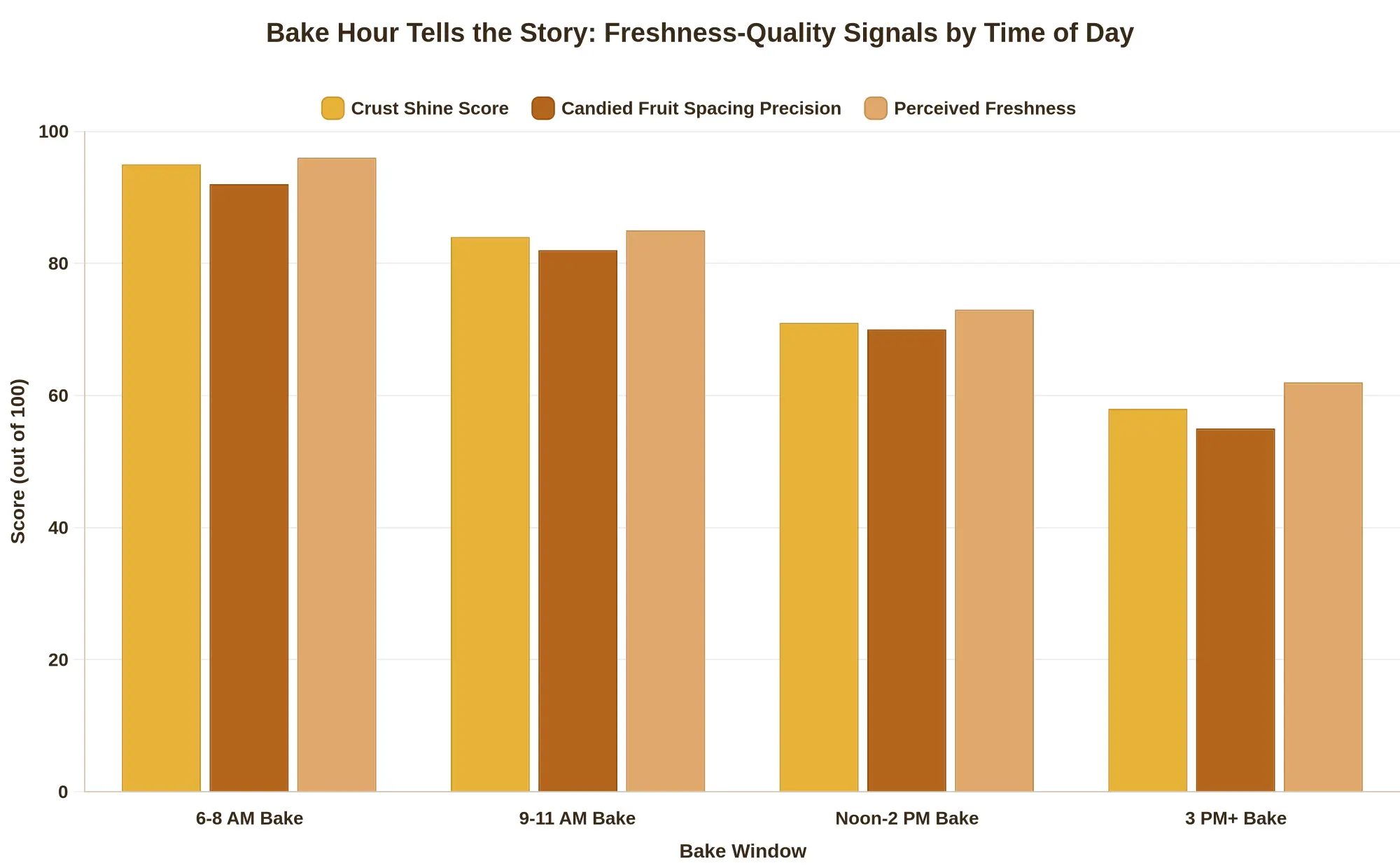
You cannot ask a Rosca what time it was born, but its surface often answers anyway. Crust shine and the spacing of candied fruit are not random decoration. Earlier bakes hold their gloss longer and keep their fruit set with more precision; later bakes lose that edge as the day’s heat and humidity do their quiet work.
The chart below tracks three freshness-related quality signals across four bake windows. Read it left to right, and the pattern is hard to miss: the earlier the bake, the stronger every surface cue.
Reading the numbers
Here is the same data as a plain table so you can see the drop-off at a glance. The scores are schematic – a 0-100 scale for comparing cues, not for grading any single loaf.
| Bake Window | Crust Shine Score | Candied Fruit Spacing Precision | Perceived Freshness |
|---|---|---|---|
| 6-8 AM Bake | 95 | 92 | 96 |
| 9-11 AM Bake | 84 | 82 | 85 |
| Noon-2 PM Bake | 71 | 70 | 73 |
| 3 PM+ Bake | 58 | 55 | 62 |
What the bars are telling you
- Crust shine drops the fastest. The morning window shows a deep, mirror-like glaze that stays elastic and reflective. By mid-afternoon the shine flattens into a dull sheen, and by a late bake there is barely a whisper of gloss left.
- Fruit spacing tightens and then drifts. A 6-8 AM bake sets candied fruit at near-uniform intervals. As the day warms, that rhythm loosens and the fruit starts to wander.
- Perceived freshness follows the glow. Notice how the freshness line tracks crust shine almost exactly. That is your eye reading the same signal your tongue will later confirm.
Why this matters when you’re shopping “near me”
When you search for a Rosca nearby, you are usually racing a clock you cannot see. The good news is you don’t have to. Scan the surface before you commit: a bright, glossy crust and evenly set fruit point to a morning bake, which is your best shot at that tender, buttery crumb. If the shine looks tired and the fruit has drifted, you are likely looking at an afternoon tray that has already given its best hours.
Curious how these cues show up in person? It helps to know how to spot a fresh Rosca de Reyes nearby before you walk in the door.
The takeaway
Bake hour is not a mystery. It shows in gloss and geometry. Learn to read crust shine and candied fruit spacing, and you will not have to guess whether the Rosca in front of you came off a cool morning oven or a warm afternoon one. Buy earlier in the day when you can, and let the surface tell you the rest.
Quick Freshness Checklist for a Rosca Near Me
When you are hunting for a rosca near you, these fast cues let you read the bake hour at a glance before you buy.
- Crust shine – Look for a high, lacquered gloss that catches the light; a dull, matte top usually points to a bake from hours earlier.
- Candied fruit spacing – Confirm the citron and cherry strips sit evenly spaced and slightly proud of the dough, the mark of a careful, recent finish.
- Warm yeasted aroma – Note any gentle, warm yeast scent; a soft fresh-bread fragrance signals a batch pulled from the oven not long ago.
- Crumb spring-back – Press the surface lightly and watch it bounce back; a tender, resilient crumb means the dough is still plush inside.
- Even golden color – Scan for a uniform golden-brown tone with no pale patches, which tells you the ring baked evenly and on schedule.
- Set sugar topping – Verify the streusel or pearl sugar clings cleanly instead of sliding off, a hint the surface was finished while fresh.
- Flexible ring – Feel for a soft, pliable loop that bends slightly rather than cracking, suggesting the bread has not sat long on the shelf.
- Ask the bake time – When in doubt, ask staff when the batch came out; a recent bake hour instantly confirms every cue above.
Together, these signals show that crust shine and candied fruit spacing are not mere decoration. They are a bakery’s honest tell for a recent bake.
Why the Bake Hour Matters for Rosca de Reyes
Some breads forgive a day on the shelf. Rosca de Reyes is not one of them. This ring-shaped celebration bread is built for the moment, traditionally baked and eaten on the same day, ideally within hours of leaving the oven. That is why the bake hour carries real meaning. It is not a marketing flourish but a genuine measure of texture, aroma, and overall eating quality.
Peak freshness is short, and the bread ages fast. Because of that, the surface tells you where a loaf sits on its timeline. When crust shine is bright and glossy, the sugars and egg wash have not yet dulled and the bake hour was recent. When candied fruit spacing looks even and the fruit sits proud on top, the dough has not yet settled, a sign it came out of the oven not long ago.
The Cues Exist Because the Bread Ages Quickly
Those visual signals are not decoration. They matter precisely because a fresh Rosca changes so fast. A dull, matte crust and fruit that looks sunken into the dough usually mean many hours have passed. Aroma fades first, then the crumb firms up, and then the whole experience goes flat.
| Time since the bake hour | Crust shine | Candied fruit spacing | Eating quality |
|---|---|---|---|
| 0-3 hours | Glossy, catches the light | Fruit sits proud and evenly placed | Soft, fragrant crumb, best aroma |
| 4-8 hours | Shine softens, slight dulling | Fruit begins to settle | Still good, aroma fading |
| 9-24 hours | Matte, dry surface | Fruit looks embedded, gaps close | Firmer crumb, drier mouthfeel |
| Over 24 hours | Dull, no reflection | Fruit low and uneven | Stale, needs gentle warming |
The Takeaway
So when you search for a Rosca near me, treat the bake hour as your buying filter. Ask when it was baked, then look for that gleam and the proud, well-spaced fruit. The freshest ring is always the one worth celebrating.
The Bake Timeline Behind Every Rosca
Before we talk about reading a loaf through its shine, it helps to see how a Rosca de Reyes actually gets made. Every quality cue you spot in the bakery case – that mirror-like crust, the even scatter of candied fruit – comes from a specific step in the timeline below.
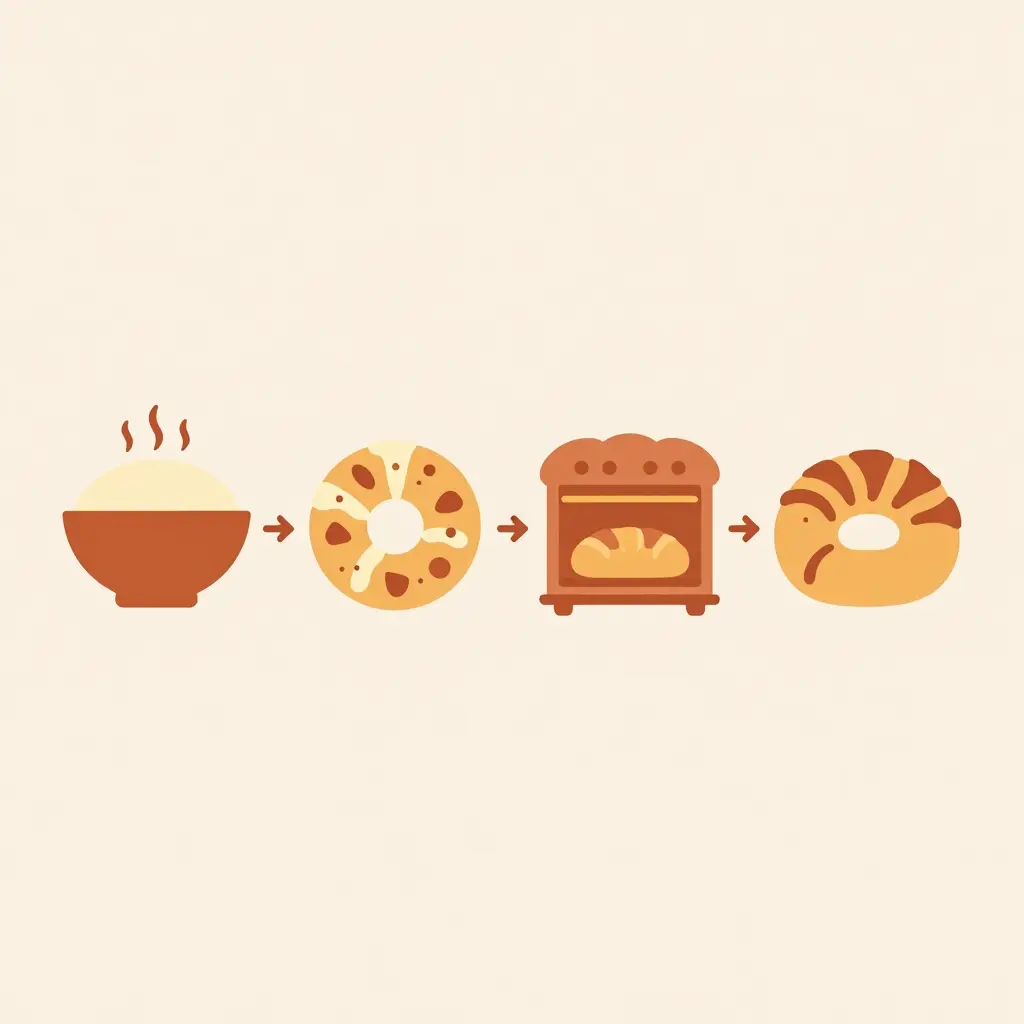
Reading it left to right, the flow moves through four checkpoints:
- Dough proofing – the covered rise that builds the airy crumb and determines how tall and tender the final ring becomes.
- Egg wash and fruit placement – the moment a beaten glaze is brushed across the surface and candied fruit is pressed in, spacing by hand.
- Baking – direct, even oven heat that browns the wash into that characteristic glossy sheen.
- Cooling and glazing – the rest and finish that set the shine and keep the fruit anchored to the crust.
Here is the key point: crust shine and fruit spacing are not decoration. They are timestamps. A high-gloss surface tells you the egg wash was fresh and the bake was recent, while tightly and evenly spaced candied fruit signals careful handwork done right before the oven. That is why two roscas sold side by side can look almost identical yet taste worlds apart.
Ready to find one worth the drive? Explore fresh rosca options near you and look for these exact cues when you walk in.
Quick Reference: What Each Step Signals
| Bake Step | What It Builds | What You Can Spot Later |
|---|---|---|
| Dough proofing | Airy crumb, proper rise | Light, tender texture |
| Egg wash + fruit | Golden color, fruit anchor | Even, tight fruit spacing |
| Baking | Caramelized, set surface | Deep amber crust shine |
| Cooling + glazing | Polished finish, stability | Mirror-like gloss, fresh aroma |
When you shop, treat these as a checklist rather than a guess. The loaf that hits every step on this timeline is the one pulled from the oven closest to your visit.
Frequently Asked Questions: Reading a Rosca’s Freshness Cues
What does a shiny crust tell me about a Rosca’s freshness?
A glossy, lacquered sheen means the loaf came out of the oven recently and was brushed with a glaze – usually egg wash or a light syrup – that still holds its luster. As a Rosca sits, that shine dulls into a matte, faintly chalky surface. A bright crust is one of the most honest signals of the bake hour, so treat visible gloss as a fresh-from-the-oven cue worth acting on.
Does even candied fruit spacing really indicate a fresher bake?
Partly. Even, deliberate spacing tells you the dough was proofed calmly and handled gently, then decorated without rushed hands pressing toppings into an over-risen surface. Spacing also shifts with time: older Roscas get jostled in transit, and their fruit drifts, cracks, or sinks as the crumb firms up. So even spacing is a sign of care first, and a hint of a younger bake second.
What time of day should I buy Rosca de Reyes for the freshest loaf?
The sweet spot is morning through early afternoon, right after the first or second bake of the day lands on the shelf. Bakeries typically pull their Rosca batches before dawn and again late morning, so a mid-morning visit catches the loaf at peak shine and aroma. If you shop late, ask which batch is most recent – a good counter will tell you straight.
How can I tell if a Rosca was baked earlier in the day?
Check three things: a still-shiny, lightly glazed crust; candied fruit that sits high and evenly spaced rather than sunken or slipped; and a soft, springy press when you touch the edge. A Rosca baked earlier in the day feels heavy for its size and smells of warm citrus and anise, while a stale one turns dry, matte, and oddly light. Learning to read these markers yourself makes any search for a fresh Rosca near me far more rewarding, which is exactly why we obsess over the bake hour.
The Takeaways: Reading a Rosca Like a Baker
Crust shine and candied fruit spacing are legible, trustworthy freshness cues. They are not decoration; they are evidence. A high, lacquered crust tells you the dough was baked recently and glazed while hot, and evenly spaced fruit with crisp edges reveals careful hands and a controlled proof. Together, these two cues let you confirm the bake hour before you buy.
When you search for a Rosca near me, let your eyes do the judging. The freshest Rosca reveals itself through a high lacquered crust and evenly spaced, crisp-edged candied fruit. That is the whole idea in one sentence.
So keep it simple. Look for crust shine. Check the candied fruit spacing. Trust that those details point to a recent bake hour, and choose accordingly.
Judge a Rosca by these cues, and you will rarely be disappointed. A bake worth celebrating always shows its work.