
Introduction
When you search for Latin bakeries near me, you usually want one thing: something fresh out of the oven. You do not need a review score or a glowing sign to work that out. Two things you can see and touch will tell you. The concha crust shows how recently the shell was baked and how well it has held up. The pan dulce tray shows how fast the goods are moving from oven to shelf.
What follows is how to read both signals like a regular. Instead of trusting signage or scrolling star ratings, you will look, touch, and time your visit. We cover what a fresh concha shell feels and looks like, why a busy tray is a quiet compliment, and how to use the two together to pick the bakery that suits you. If you bake at home, or you have eaten pan dulce for years, or you just want warm bread on a Saturday morning, these checks will make the next stop worth it. Start with Latin bakeries near you and use your eyes and nose once you are there.
Why “Near Me” Searches Point to Freshness
When a shopper types “latin bakeries near me,” they are asking for two things at once: a short drive and a same-day bake. The same holds for “panaderia near me,” “pan dulce near me open now,” and “panaderias cercas de mi.” Distance sets the radius, but freshness is what the shopper actually wants.
A panaderia is a Latin American bakery that bakes and sells pan dulce, conchas, and other sweet breads, typically in small storefront batches. That definition explains why “near me” searches reward one kind of business over another.
Someone searching latin bakeries near me usually wants to walk in and find trays filled this morning, not last night. The “open now” qualifier makes the timing explicit: the ovens are already running, so a warm concha can be bought and eaten the same day. Searches for pan dulce near me open now are, in practice, fresh-bread searches dressed up as location searches.
Location-based results favor bakeries that bake in small, frequent batches. A storefront that pulls conchas from the oven every couple of hours keeps its supply turning over, so the crust stays crisp and the crumb stays soft. A large warehouse that bakes once in the morning and ships all day cannot match that turnover. Its bread may be geographically close, but by late afternoon it reads as stale to anyone who knows the difference.
Local ranking reinforces the pattern. Google orders map results on relevance, distance, and prominence, so a nearby bakery with steady, fresh output tends to surface higher than a distant warehouse running a single daily bake. For the shopper, that means the top “near me” result is often also the freshest one.
Put simply, “near me” is shorthand: close enough to visit today, fresh enough to be worth the trip.
How a Concha Crust Actually Sits Above the Crumb
A concha is not one uniform dough. It is really two different mixtures stacked and baked together, and that stacking is exactly why the top shell cracks into those iconic seashell arches while the inside stays pillowy.
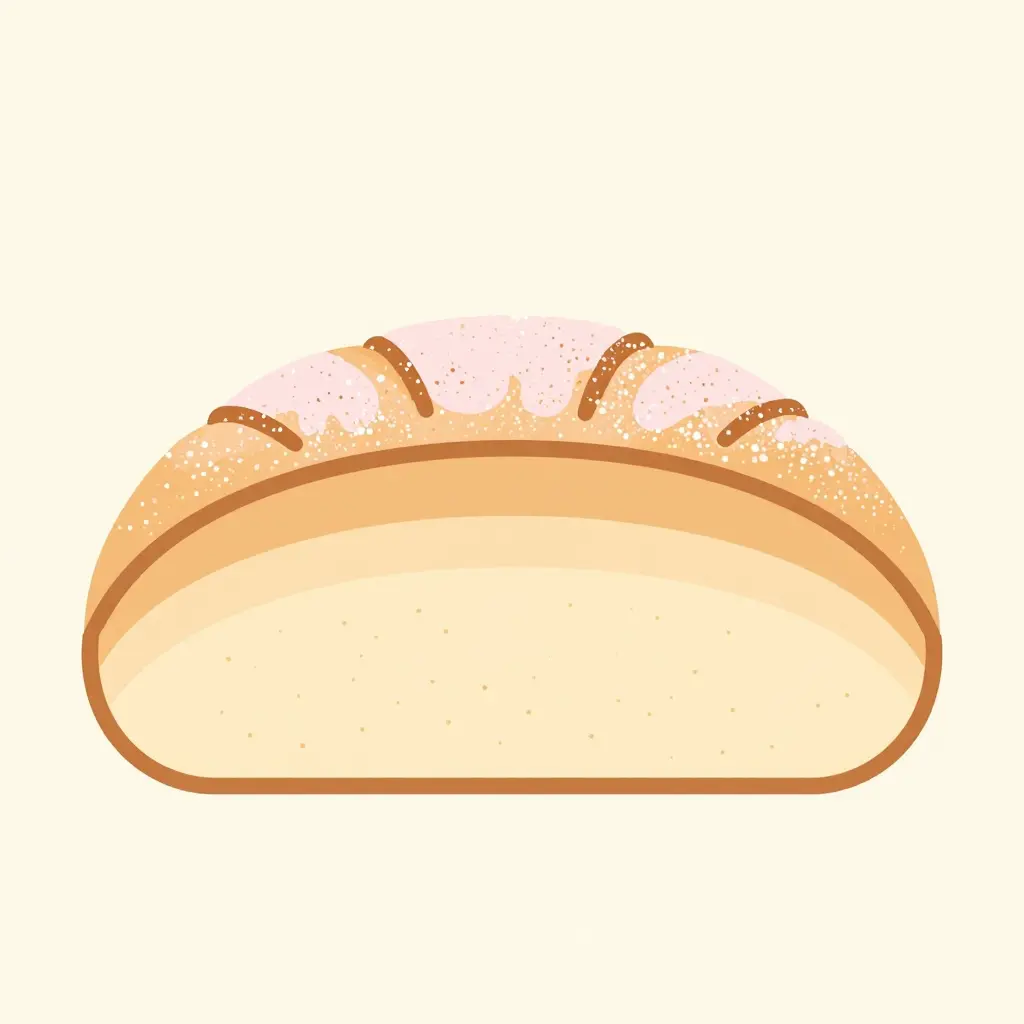
Three layers are at work in the diagram above:
- The crumb (base layer) – This is the enriched sweet dough: flour, butter, eggs, milk, and yeast. During baking, trapped CO2 pushes the dough upward, leaving it soft, airy, and slightly springy. It is the fluffy body you tear apart with your fingers.
- The topping shell (top layer) – A separate paste of flour, sugar, and fat (often butter or shortening) rolled thin and pressed onto the dough. Because it is drier and lower in moisture, it bakes into a crisp, crackled lid rather than puffing up like the crumb.
- The crust boundary (the thin line) – Right where the two mixtures meet, the rising dough pushes against the firmer topping. That tension forms a thin, lightly caramelized seam. This is the “crust” that anchors the shell in place and keeps it from sliding off during proofing and baking.
Why this matters when you are shopping
With the layers in mind, freshness signals get easier to read. A shell that still sits neatly on its crumb line and cracks cleanly when pressed usually means a recent bake. A shell that has separated, gone soft, or crumbles off in sheets often points to a concha that has been sitting out for a while. How the shell bonds to the crumb across that seam is one of the most reliable cues there is, and it is worth checking at latin bakeries near me before you reach for the tongs.
Next time you lift a concha off the tray, you are not just seeing sugar and dough. You are seeing two bakes layered into one, held together by a single thin crust seam.
The Concha Crust Test: What a Fresh Shell Looks Like
A concha announces its age before you ever take a bite. The topping that gives the concha its name is the bakery’s most honest freshness label, and it takes about five seconds to read.
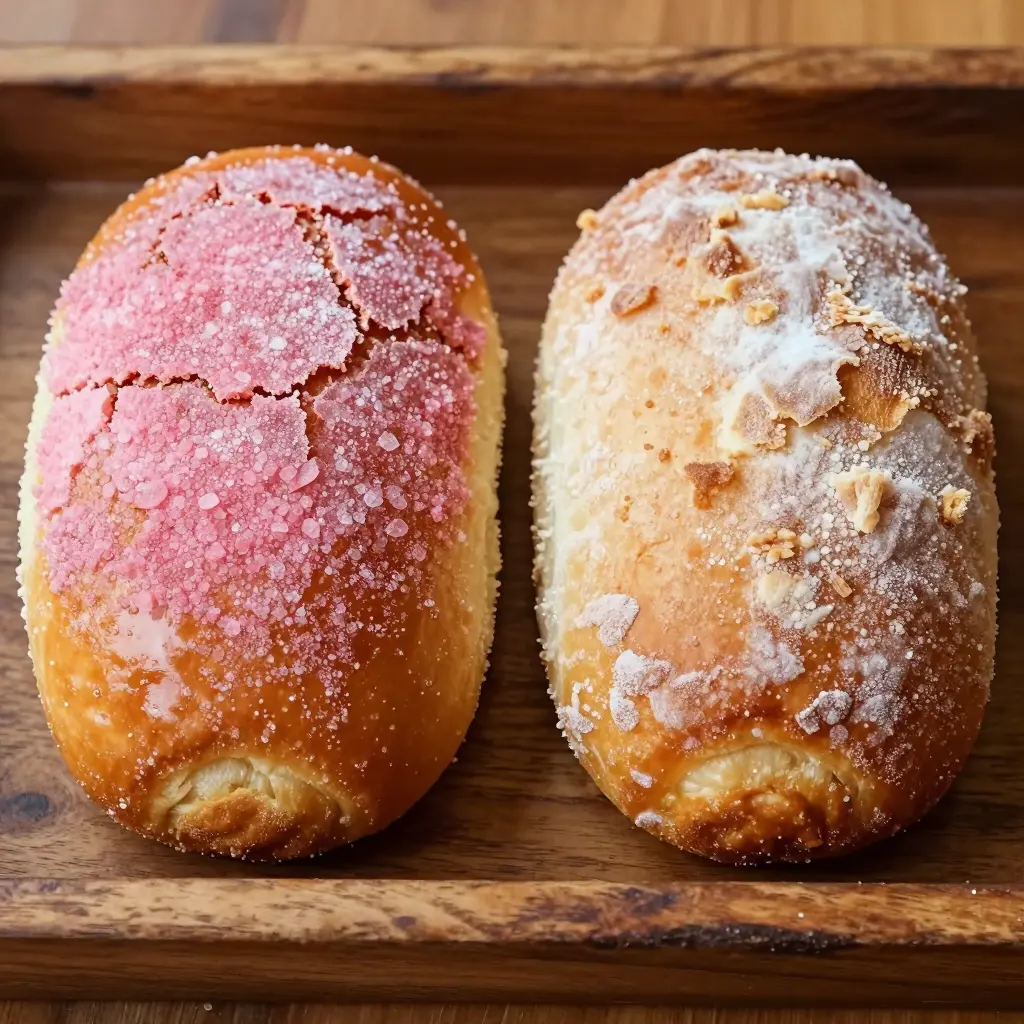
Start with the color. A fresh concha crust looks lightly glazed, somewhere between matte and shiny, with a warm tone that matches the sugar tint: pink, white, yellow, or chocolate. A stale one goes chalky and pale, and the color looks dusty rather than creamy.
Here is what to check with your eyes and hands:
- The crossroads pattern: On a fresh concha, the crisscross grooves cut into the shell are crisp and evenly spaced, with fine hairline cracks radiating outward. When those lines blur, flake, or fill with loose crumbs, that concha has been sitting a while.
- The crackle: A good concha crust crackles lightly when you press it, a soft, papery sound rather than a snap. Greasy fingertips after one touch mean the topping has started to weep oil.
- The spring-back: Press the center gently with one finger. A fresh concha yields slightly and bounces back within a second or two, leaving almost no dent. If your fingerprint stays, or the shell crumbles off in dry flakes, walk away.
- The base: Flip it over. Fresh pan dulce has a soft, springy bottom with a light golden tone, not a hard, shiny, or damp one.
Put those four checks together and you can judge a whole tray in seconds: glossy shell, crisp pattern, gentle give, clean base. If you are hunting for the best pan dulce near me options, that quick test keeps you from paying for yesterday’s bake. When the toppings look crisp and the shells feel light, you can browse with confidence and pick the warm, soft concha that actually earns its tray space.
Tray Turnover: The Bakery’s Quiet Freshness Clock
Pan dulce tray turnover is the simplest freshness gauge in any panadería. A tray that empties fast and gets refilled fast tells you the ovens are running all day. A tray that sits half-full for an hour tells you the opposite.
Watch the tongs and trays. Constant motion means steady baking; when a worker is sliding fresh pans onto the rack and pulling empty trays off the line, product is flowing. Check the sheen. Recently baked conchas and empanadas have a soft gloss on their sugar topping and a slight warmth near the crust, while dull, matte, dry-looking surfaces suggest the items have been sitting out. Look at the depth of the pan dulce tray. Shallow piles mean the stock is moving; deep, untouched stacks usually mean slow sales and older bread. And track a popular item like a concha or a rosca. If the last one disappears and a fresh batch replaces it within minutes, that bakery is baking frequently. If the same conchas sit there from morning to afternoon, freshness is lower.
All of these are signals of how recently something came out of the oven, and tray turnover is the quiet clock behind them. For a bakery that keeps things moving, find pan dulce near you that’s open now and look for the trays.
Pan Dulce Tray Turnover by Hour of Day
If you have ever walked into a Latin bakery and wondered when the good stuff actually comes out, the answer is hiding on the shelves. Tray turnover, or how often those metal trays get swapped for fresh ones, is one of the most honest freshness signals you can read as a shopper. When trays move fast, the pan dulce on top is almost always still warm. When they sit, it has likely been a while.
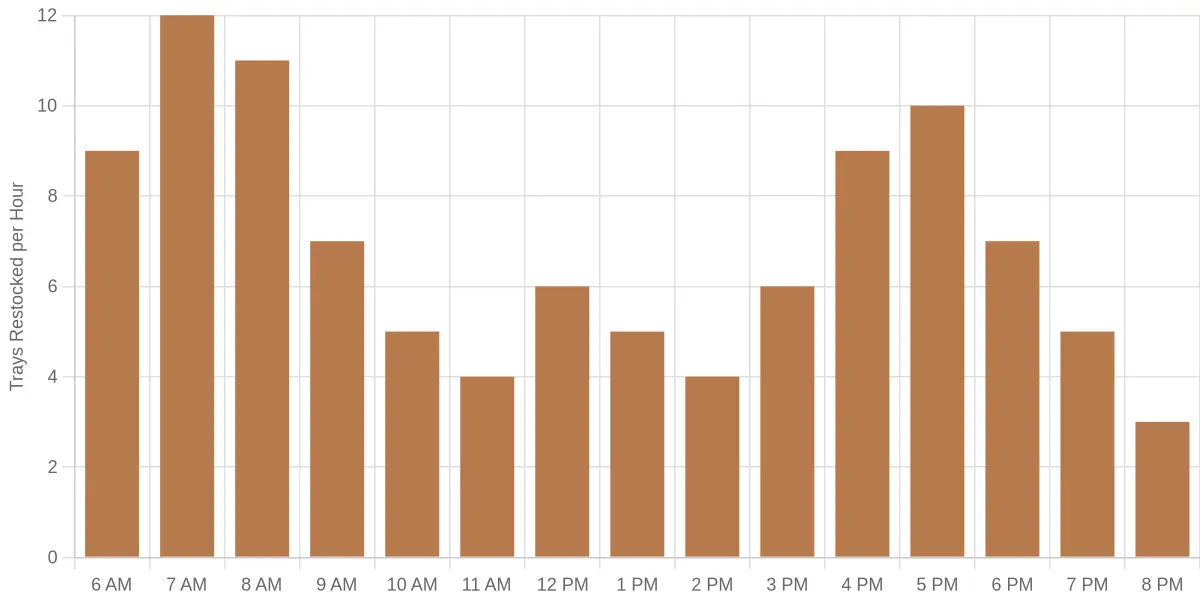
The chart below sketches a typical bakery day, tracking the number of trays restocked each hour from opening until closing. Two waves stand out: a steep early-morning rush and a second, softer surge in the late afternoon.
Reading the Two Peaks
- 7 AM – the golden hour. Turnover hits its highest point (12 trays) as commuters and early risers grab conchas, bolillos, and cuernitos for breakfast. Arrive before 8 AM for the warmest picks.
- 8 AM – still strong. The 11-tray mark means the morning bake is still flowing. This is your second-best window if you miss the earliest rush.
- 10 AM-1 PM – the midday plateau. Restocking drops into the 4-6 range. The selection is consistent, but individual items have been out longer, so squeeze a concha or check the underside for softness.
- 5 PM – the after-school surge. A jump back up to 10 trays as families swing by after work and school. This is when the day’s second bake earns its keep, and it is a favorite for a fresh merienda.
- 8 PM – winding down. Only 3 trays an hour signals the last bake, so late pickings are thinner and sometimes day-old.
Why This Matters When You Shop
Tray turnover is essentially a real-time freshness clock. A shelf that keeps getting refilled is a great sign; a crowded pile that nobody is touching usually is not. Next time you are hunting for pan dulce near you right now, glance at the trays first, listen for the clatter of a fresh batch hitting the rack, and time your visit to the peaks for the best bite.
Tray Turnover at a Glance
| Time Window | Trays Restocked/Hour | Freshness Read |
|---|---|---|
| 6 – 8 AM | 9 – 12 | Peak – grab it warm |
| 9 AM – 12 PM | 4 – 7 | Steady – check softness |
| 1 – 3 PM | 4 – 6 | Slow – best for staples |
| 4 – 5 PM | 9 – 10 | Second peak – fresh bake |
| 6 – 8 PM | 3 – 7 | Wind-down – limited picks |
How to Read a Pan Dulce Tray in 60 Seconds
Ten seconds of careful looking can tell you more about a bakery than any sign out front, so scan the pan dulce tray for these freshness signals before you grab a pair of tongs.
- Concha crust: The sugar shell on a fresh concha should crack cleanly under light pressure, not flake off in damp, sticky chunks.
- Tray turnover: Watch whether staff refill the pan dulce tray while you wait, since steady restocking means nothing sits out long enough to go stale.
- Tong hygiene setup: Clean tongs stored upright in a holder, with nowhere for them to rest on bare trays, signal a shop that takes food safety seriously.
- Bake-time signage: A handwritten card naming the morning bake time tells you the goods were made today rather than reheated from yesterday.
- The sheen of toppings: A light-catching gloss on glazed or egg-washed pieces points to a recent bake, while a dull, matte surface hints at hours of sitting out.
- The aroma at the door: A warm, yeasty, cinnamon-and-sugar smell that greets you at the entrance is one of the most honest freshness signals of all.
If you would like to compare these cues in person, browse a trusted local option through our guide on panaderas near me.
Two Signals, One Conclusion
The concha crust tells you how fresh one pastry is. Pan dulce tray turnover tells you how fresh the whole bakery is. Read them together, and you can walk in and out with confidence.
The concha crust matters on its own because it is the most honest thing in the case. A good concha has a shell that is dry and crisp on top, giving way to a soft, tender crumb underneath. If that topping is soggy, pale, or sliding off, the pastry has been sitting too long or was baked carelessly. That single bite tells you whether the baker cares about details.
The pan dulce tray turnover matters because it shows you the rhythm of the shop. Watch how fast trays empty and how often new ones come out warm from the back. A busy, steadily rotating case usually means fresh goods almost every hour.
You do not have to choose between the two signals, but they should not be weighted equally. Treat the concha crust as your proof and the pan dulce tray turnover as your pattern. When the crust is crisp and the trays keep moving, both point to the same conclusion: this is a bakery baking today, not last night. That is the moment to grab a box and enjoy a genuinely fresh batch, the kind you can count on at a trusted panadería in Sacramento.
Freshness Signals at a Glance
Before you commit to a box, give the case a quick scan. These five signals tell you whether the pan dulce in front of you just came out of the oven or has been sitting since sunrise. Want to put them to work right away? Start with our guide to finding Latin bakeries near you and compare the shelves yourself.
| Signal | What a Fresh Bake Looks Like | What a Stale Bake Looks Like |
|---|---|---|
| Concha crust gloss and spring-back | Shell is matte, dry to the touch, and springs back when you press the center. | Crust feels tacky or greasy, and a gentle press leaves a dent that stays. |
| Tray turnover speed | Warm trays empty fast; staff are restocking every few minutes. | Same pastries sit in the same spot for hours with no gaps in the rows. |
| Topping sheen | Sugar or streusel topping looks dry and crinkled, not shiny. | Topping glistens with oil or looks flat and dull under the display light. |
| Aroma at the door | Warm butter, cinnamon, and toasted sugar greet you as you walk in. | Air smells faintly of cold dough, cardboard, or nothing at all. |
| Tong and tray presentation | Tongs are clean, pastries are spaced apart, and crumbs are swept between batches. | Pastries are stacked and smushed, crumbs pile up, and tongs rest on bare trays. |
Use this table as your two-second gut check. If most rows land on the left, you found a keeper; if they slide toward the right, it may be worth waiting for the next batch or coming back earlier in the day.
Regional Pan Dulce and the Signals That Travel With Them
Different Mexican and Latin American communities lean toward different pan dulce favorites, and the bakery shelves tend to reflect that. A neighborhood with roots in central Mexico often keeps a steady supply of conchas, while communities that celebrate the January 6 holiday fill their cases with sweet rosas de reyes topped with candied fruit and sugar. Bakeries serving South American customers may spotlight flaky layered pastries and creamy mil hojas squares, and pan de muerto reappears every fall for Day of the Dead.
Tres leches pastries round out many of these displays. The sponge soaked in three milks is a staple for birthdays and celebrations, and it sits alongside conchas, roscas, and pan de muerto in the same case.
What stays consistent across all of them is how you judge freshness. Crust tells you a lot: concha shells should have a slight sheen and give a little when pressed, and mil hojas should still crackle instead of going soft. Tray turnover matters just as much. Empty spots, crumbs, and tongs in motion are signs that the case is being refilled.
When a bakery serves a specific community, it often bakes its most popular item more frequently than anything else, which makes tray turnover especially informative. If you are searching for pan dulce near me, watch the one tray the staff keep restocking.
Those two signals, crust texture and how fast trays empty, work the same whether the specialty is a concha, a rosca, a mil hojas, a tres leches slice, or a pan de muerto.
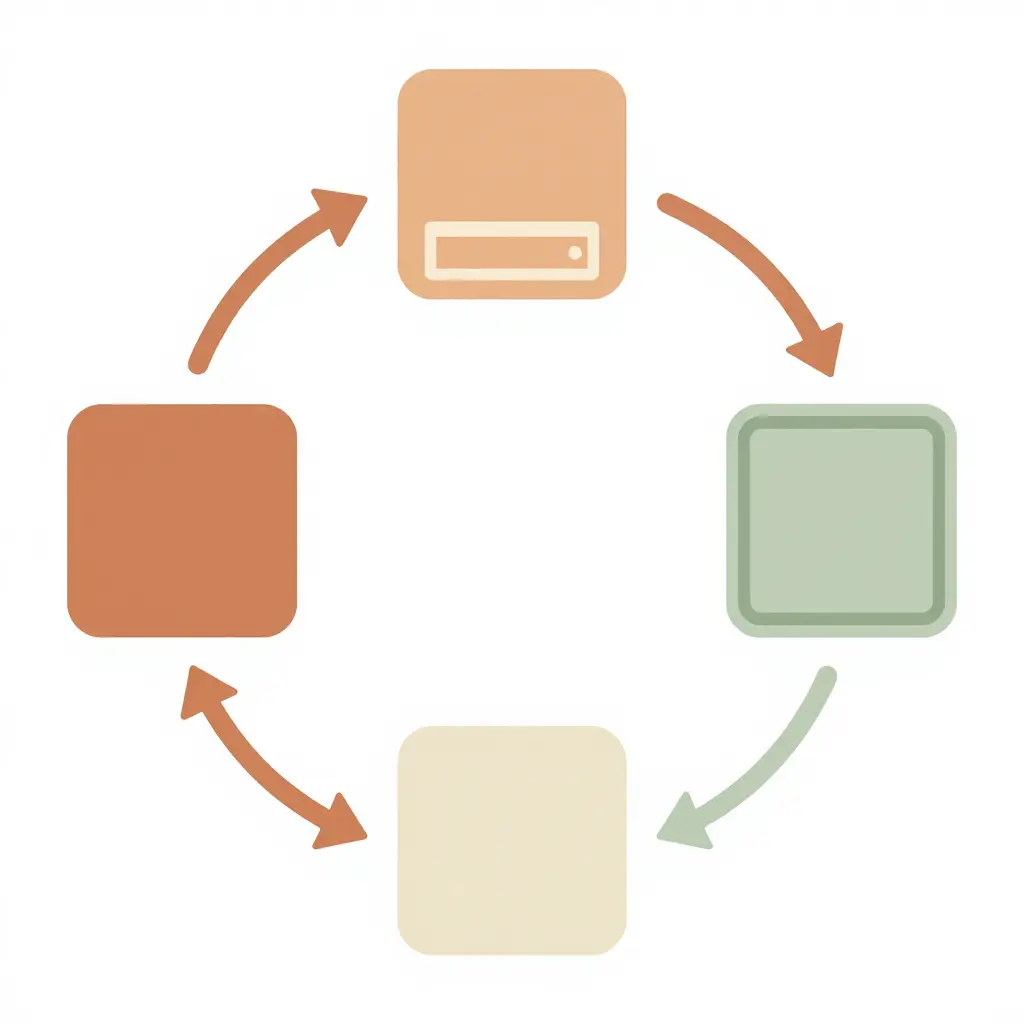
That diagram captures the core idea behind a busy Latin bakery: trays never sit still. Bread moves from the baking step to the display tray, gets handed to a customer at pickup, and circles back to the kitchen for restocking. That continuous loop is exactly what makes a warm concha feel fresh the moment you pick it up. When you spot an empty gap on a tray at a nearby Latin bakery, it is usually a good sign – it means the cycle is moving fast.
Frequently Asked Questions About Latin Bakeries and Pan Dulce Freshness
How can I tell a fresh concha by its crust?
A fresh concha has a topping that feels dry and slightly crisp, and it cracks cleanly rather than smearing or flaking off in greasy clumps. Press the shell gently: it should give a light crackle, while the bread beneath springs back instead of staying dented or feeling damp.
Why does pan dulce tray turnover matter more than a bakery’s posted hours?
Posted hours only tell you when the doors are open, not when the pan dulce tray was last refilled. A busy bakery that sells through and restocks its trays every few hours will almost always be fresher than a quiet shop holding one batch all day. Watch how quickly trays empty and refill instead of trusting the clock alone.
Are early morning or late afternoon visits better for fresh pan dulce?
Early morning is usually best, because most bakeries pull their first trays of pan dulce from the oven before or around opening. That said, a well-run shop often bakes a second round in the mid to late afternoon, so a 3 to 5 p.m. stop can catch a fresh, warm batch. If you want the widest selection, ask staff when their next tray is due.
How do “near me” searches help me find fresh Latin bakeries?
Searching for latin bakeries near me surfaces shops that are actually close enough to visit while goods are still warm. Pairing that search with open-now filters helps you skip a closed storefront and land on pan dulce near me open now results you can reach today. Reading recent reviews about tray turnover adds a useful layer of confidence.
Can home bakers recreate the concha crust freshness signal?
Yes. Let the topping rest long enough to dry slightly before baking, so it sets into a shell that crackles instead of melting into the dough. Chilling the shaped conchas briefly before they go into the oven also helps the topping hold its pattern and texture. Home bakers can judge their own results with the same press-and-listen test they use in a shop.
Do roscas and mil hojas follow the same freshness logic?
They do, even though their textures differ. A fresh rosca feels light and dry on top with a tender crumb, while a fresh mil hojas stays crisp and shatters cleanly instead of turning soft or soggy. In both cases, quick tray turnover and a dry, clean surface are the signals that tell you the pastry was baked recently.
Reading the Tray, Finding Your Bakery
You now have two simple, practical tools for spotting fresh pan dulce: the concha crust and the pan dulce tray turnover.
The crust tells you a lot at a glance. A fresh concha has a soft, matte shell with clean, defined ridges in its sugar topping. If that topping is cracked, glossy, or separating from the bread, it has likely been sitting a while. The crumb underneath should feel tender and springy, not dry or heavy.
The tray tells you more. When you walk in and see a nearly full display, a steady stream of shoppers, or staff refilling bins from the back, that is a good sign; fast turnover means what you buy was baked recently. Quiet, picked-over trays with lonely pastries are your cue to ask when the next batch comes out.
Together, these signals let you judge freshness without asking a single question. They work whether you are chasing conchas, cuernitos, orejas, or empanadas.
On your next search for latin bakeries near me or pan dulce near me, put them to work. Look at the crust, watch the tray, and compare what you see. Explore a few nearby options and you will quickly find the shop that bakes with real care.
If you are ready to taste the difference for yourself, discover fresh pan dulce made close to home and treat yourself to something warm. Your next favorite bakery might be just around the corner.