
Panaderías Cerca de Mí: Why the Nearest Bakery Is Not Always the Freshest Bolillo at 7am
Search for panaderías cerca de mí and the closest shop looks like the obvious choice. Distance, though, says nothing about how fresh the bread is. A fresh bolillo is a matter of baking cycles, oven schedules, and how long ago a batch came off the rack, not how few blocks you drove.
A panadería near me can sit right around the corner and still be selling bolillos that left the oven hours earlier. A shop slightly farther out might be pulling golden, crackling loaves at 6:45 a.m., just in time for your morning coffee. What makes bolillo fresco is the time since it was baked, not the time you spent getting there.
The useful move is to think less like a driver and more like a baker. Instead of ranking shops by distance, ask when they bake, how often they refill the trays, and what time the first batch of the day is ready. Distance tells you how long the trip takes; the baking schedule tells you whether the bread is worth the trip. For a closer look at how that plays out, see our guide to finding the right panaderías cerca de mí by freshness rather than location.
Baking Schedules and Batch Timing: Why the Closest Bolillo Isn’t Always the Freshest
Type “panadería near me” or “panaderías cerca de mí” at 7 a.m. and your map sorts shops by distance, not freshness. The bakery two blocks away may have finished baking hours ago, while a shop a little farther down the road is pulling hot bolillos from the oven right now. To find the freshest bread you have to think like a baker, and bakers run on schedules.
Most panaderías keep a similar daily rhythm. Once you know it, you can read the clock instead of the map.
Overnight proofing (roughly 10 p.m. to 4 a.m.). Dough is mixed and shaped late at night, then left to proof slowly in a cool room. That slow rise builds the flavor and structure of a good bolillo.
Early-morning first bake (about 4 to 6 a.m.). The ovens come on before sunrise. This batch usually greets the earliest customers: delivery drivers, commuters, and abuelas who know exactly when the door opens.
Mid-morning second bake (about 8 to 10 a.m.). A second round goes in for the breakfast and late-morning crowd. This is often the best window for a warm, just-baked bolillo.
Slower afternoon production (after about 2 p.m.). Afternoons are quieter. Some shops bake smaller batches; others just restock the shelves with bread from the morning.
So what should guide you – “closest” or “freshest”? The closest shop wins on convenience, but it may be selling bread that has been sitting since dawn. The freshest shop wins on quality: bread still warm, with a crisp crust and a soft crumb. If that is what you are after, call ahead or find out who is baking now before you drive over.
| What you’re weighing | Closest bakery | Freshest bakery |
|---|---|---|
| Travel time | Usually shortest | May add a few minutes |
| Bread temperature | Often cooled or cold | Frequently still warm |
| Batch timing | Unknown without asking | Matches a fresh bake |
| Best for | A quick errand | Peak flavor and texture |
Distance tells you how easy a trip is; timing tells you how good the bread will be. If you want the best fresh bolillo, find out who has a batch coming out of the oven right now, then check which nearby spots are open and baking.
The Bakery’s Daily Baking Cycle: Why Timing Beats Distance
Bolillo freshness is a clock problem, not a location problem. Picture the daily rhythm of a typical bakery: ingredients, overnight proofing, first bake, rest, second bake, warm counter display. That loop is the whole story. A loaf that came out of the oven at 5:30 a.m. is still pleasantly warm at 7 a.m.; a loaf one step behind on the same circle can feel like a leftover by that same hour. Same counter, same case, two very different loaves.
Keep the cycle in mind as you read on. Every tip that follows comes back to one question: where is this bread on the circle right now? If you want to time your visit around those fresh-from-the-oven windows, it helps to know which shops open early and bake all morning.
Why the Nearest Shop Isn’t Always the Freshest
Search panaderías cerca de mí at 7 a.m. and the closest door looks like it should hide the warmest bread. Distance and freshness are two different things, though. Freshness depends on a shop’s production rhythm, not its map pin. Here is what separates a nearby bakery from a genuinely fresh one.
Batch Size and Turnover
A small shop that bakes tiny batches sells through them fast, so every bolillo is recent. A larger location with huge batches may still have yesterday’s trays on the rack. Slow turnover is the reason: even a shop with hot ovens can be selling old bread.
Time Since the Last Bake
Ask when the last batch came out. If the answer is “four hours ago,” you are buying bread that is already cooling past its prime. The freshest bolillo usually appears within minutes of a bake, not at opening time when the morning run is still queued.
How Quickly a Popular Shop Sells Out
A busy panadería near me cuts both ways. High demand empties trays fast, which keeps product moving. It also means the 7 a.m. batch may vanish by 7:20, and what is left is whatever did not sell. Arriving mid-rush often beats arriving after it.
Ovens Being Free
Ovens are the real bottleneck. When every rack is occupied by pan dulce or cakes, bolillo has to wait its turn. It goes in later, and you buy it later in its life. A shop with idle oven capacity can bake on demand; a fully booked shop cannot.
Demand-Driven Production Schedules
Some bakeries bake to a schedule rather than a guess, staggering batches so fresh bread lands continuously through the morning. That is one reason to explore Latin bakeries near me instead of defaulting to the closest sign.
Baked On-Site vs. Delivered from a Central Facility
This is the quiet dealbreaker. Some locations only sell bread trucked in from a central facility, so “fresh” depends on a delivery route and its timing. A true on-site panadería bakes in its own ovens, which means freshness is measured in minutes, not miles.
The Takeaway
Proximity saves steps; freshness saves flavor. Judge a bakery by batch timing, turnover, oven capacity, and whether it bakes on-site, and the nearest door may no longer be your first stop.
Why the Freshest Bolillo Is About Timing, Not Distance
Bolillo does not go stale by the mile. It goes stale by the minute since the last bake. Two shops could sit equally close to your kitchen at 7am, and the one two blocks farther might still hand you a warm, crackling bolillo simply because its oven door opened ten minutes ago.
This chart tracks freshness across a typical morning, from 5am to 1pm, with three bakes built into the timeline.
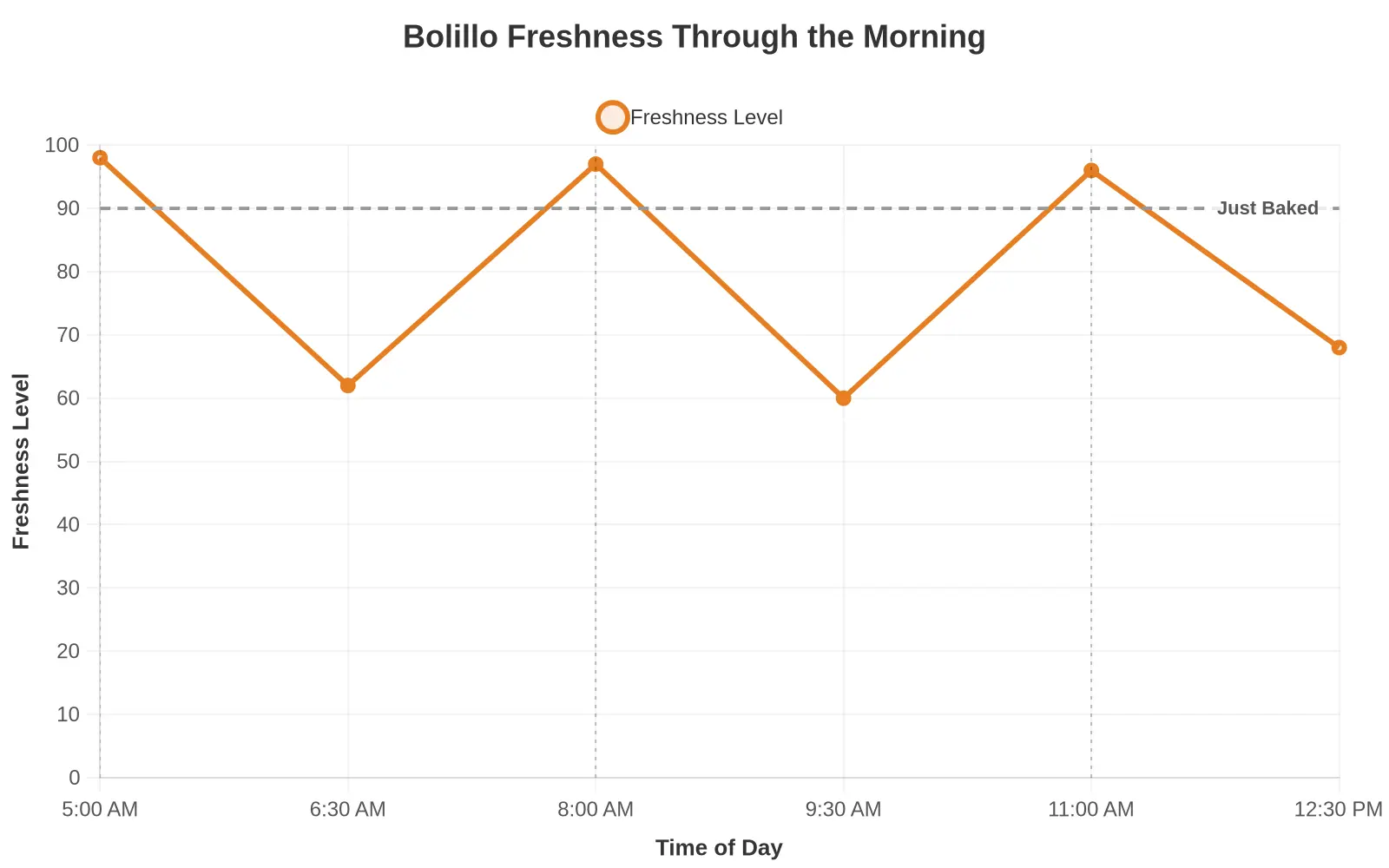
Freshness spikes right after each bake and slides steadily until the next batch, which is why the closest bakery is not automatically the freshest one at 7am.
What the Curve Is Telling You
- Just-baked peaks: Freshness is highest right after a bake and drops fast over the first 90 minutes, as moisture moves and the crust softens.
- The 7am trap: If a shop’s only bake happened at 5am, or the night before, its bolillo is already hours into the decline, no matter how close it is.
- The better question: Instead of asking how near a bakery is, ask when it last pulled bread from the oven. A quick call ahead turns a guess into an answer.
That shift in thinking separates a mediocre morning torta from a memorable one. If you want to check bake rhythms at panaderías cerca de mí, ask for the bake times before you make the trip.
How to Spot a Fresh Bolillo: A Practical Checklist
-
Crisp, slightly flaky crust. Run your fingertips along the top: a fresh bolillo has a thin, golden shell that crackles softly and flakes just a little. A slick or leathery surface usually means the bread has been on the shelf for hours.
-
A warm or gently warm feel. A bolillo fresco should still carry some warmth from a recent bake, especially during the morning rush. If it is stone cold all the way through, ask when the last batch came out of the oven.
-
Soft, airy interior. Tear one open and look for an open, cottony crumb dotted with plenty of small air pockets. A dense, gummy center is a sure sign the dough was rushed or the loaf is well past its prime.
-
A hollow sound when tapped. Tap the bottom; a fresh bolillo answers with a clean, hollow “toc.” A dull thud usually points to a heavier, older loaf.
-
A crumb that springs back. Gently squeeze the bread: a fresh bolillo feels pliable and bounces right back into shape. If it stays crushed or feels stiff, it is on its way to becoming a crouton.
-
Aroma that says “just baked.” Lean in and breathe: you should catch a warm, yeasty, ever-so-slightly sweet scent. A faint or stale smell is your cue to keep looking for the best panadería near you.
Does a Shorter Walk Guarantee a Fresher Bolillo?
When you are hunting for panaderías cerca de mí, the closest door looks like the freshest bread. The real deciding factor is when each oven finished baking, not how many blocks separate you from it.
| Distance from you | Typical time since last bake | Freshness at 7am |
|---|---|---|
| 2 blocks (a 3-minute walk) | 6 to 7 hours (baked around midnight for early deliveries) | Cooled and settling; crust turning soft, interior already firming up |
| 5 minutes by car | 4 hours (baked near 3am) | Pleasant and lightly warm, but edges beginning to dry out |
| 12 minutes by car | 45 minutes (fresh batch out at 6:15am) | Steam still rising; golden crust crackles and crumb is pillowy-soft |
| 18 minutes by car | 2.5 hours (baked around 4:30am) | Still good and slice-worthy, though no longer at its peak |
| 25 minutes by car | 20 minutes (baked at 6:40am) | Straight-from-the-oven warmth; the lightest, most aromatic option of all |
| 3 blocks (a 4-minute walk) | 5 hours (baked near 2am) | Chewy and serviceable, but clearly past its prime |
As the table shows, the bakery two blocks away can easily be the least fresh, while the one a 20-minute drive out is the warmest loaf in your morning routine.
How to Find the Freshest Bolillo Near You
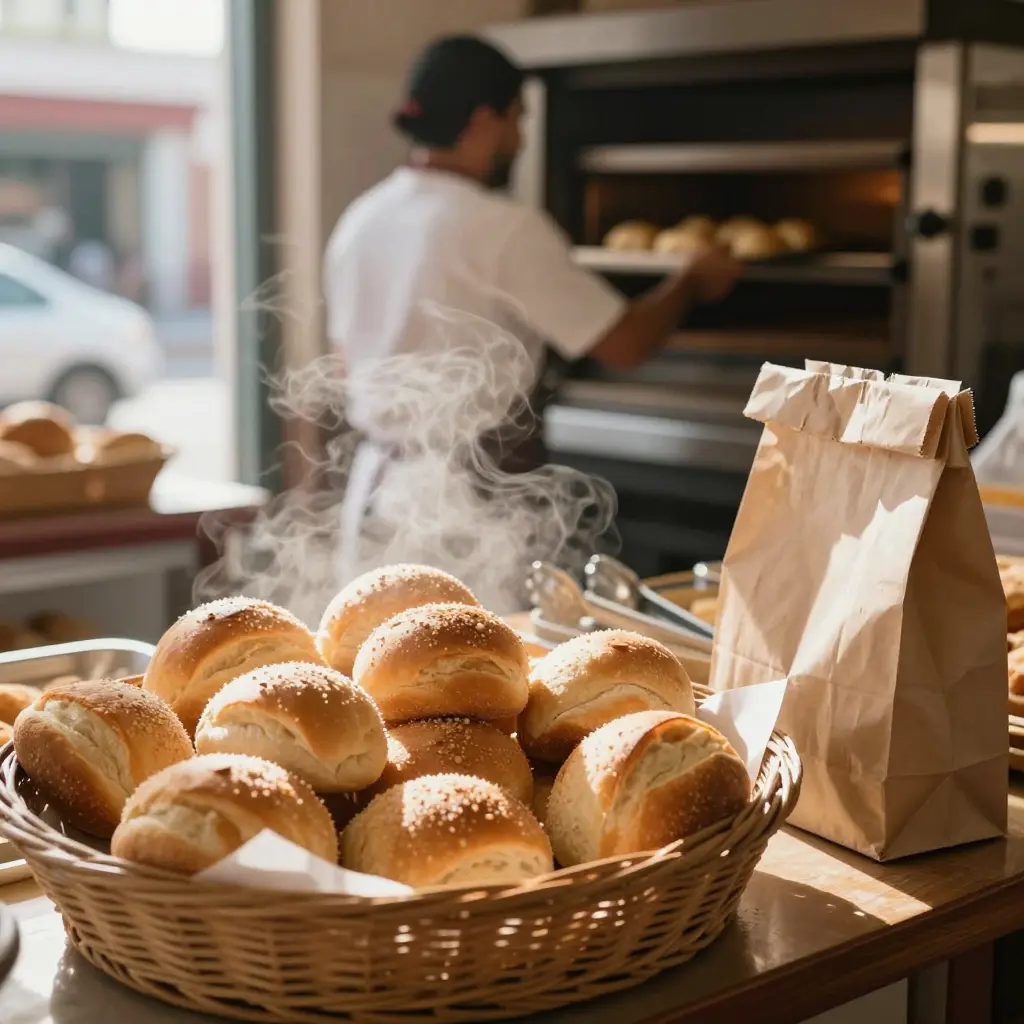
The nearest bakery is not automatically the one with the freshest bolillo. Timing, oven schedules, and turnover matter far more than distance. Here is how to figure out, in a few minutes, which shop near you is pulling warm bread out of the oven right now.
1. Call ahead and ask when the next batch comes out
A quick phone call is the fastest shortcut. Ask one specific question: “When does your next batch of bolillo come out of the oven?” A confident, immediate answer usually means the staff knows their baking schedule and the shop is well run, which is a strong sign for a panadería near me. If they hesitate or say “the bread is already out,” you have your answer, and you can decide whether it is worth the trip.
2. Learn the shop’s baking rhythm
Most bakeries follow a predictable pattern: a big early-morning bake, a midday refill, and often another batch in the late afternoon or evening. Once you know the rhythm, you can plan around it instead of guessing. This is the real trick behind a freshest bolillo: show up when the bread does. Ask the cashier or watch over a few visits, and the pattern becomes obvious.
3. Visit shortly after a known bake time
Bread peaks within the first 30 to 60 minutes after leaving the oven. If a shop bakes at 6:00 a.m., arriving at 6:15 beats arriving at 7:00. For shops that keep ovens running into the evening, it helps to find a pan dulce spot that is open now so you can time your visit to a fresh batch rather than the end of the day.
4. Check whether the shop bakes on-site
If you can smell bread baking as you walk up to the door, that is a good sign. Bakeries that bake on-site have warm trays and staff moving between the oven and the counter. Shops that only reheat or resell bread from a central kitchen can taste fine, but they rarely match the crackly crust and soft crumb of bread baked minutes ago a few steps away.
5. Observe turnover volume
Freshness you cannot smell is often freshness you can see. A shop with steady foot traffic, fast-moving baskets, and shelves that empty and refill through the day is turning over its bolillo quickly. Slow-moving shelves and a quiet counter usually mean the bread has been sitting for hours.
Quick reference
| Signal | Fresh bread | Older bread |
|---|---|---|
| Aroma | Bready, warm | Faint or stale |
| Crust | Crackly, crisp | Soft or chewy |
| Shelves | Refilled often | Full and untouched |
| Staff answer | Clear bake time | Vague response |
Put these steps together and you will stop driving to whatever is closest and start driving to whatever is freshest. Once you have a go-to spot, it also helps to explore a trusted panecito stop nearby for those small, everyday cravings.
Timing Your Bakery Visit: A Simple Flow to Follow
Getting the warmest bolillo is less about luck than sequence. Run this checklist before you leave the house: check the time, confirm the bake schedule, plan to arrive shortly after a bake, then pick your loaf from the freshest batch on the tray.
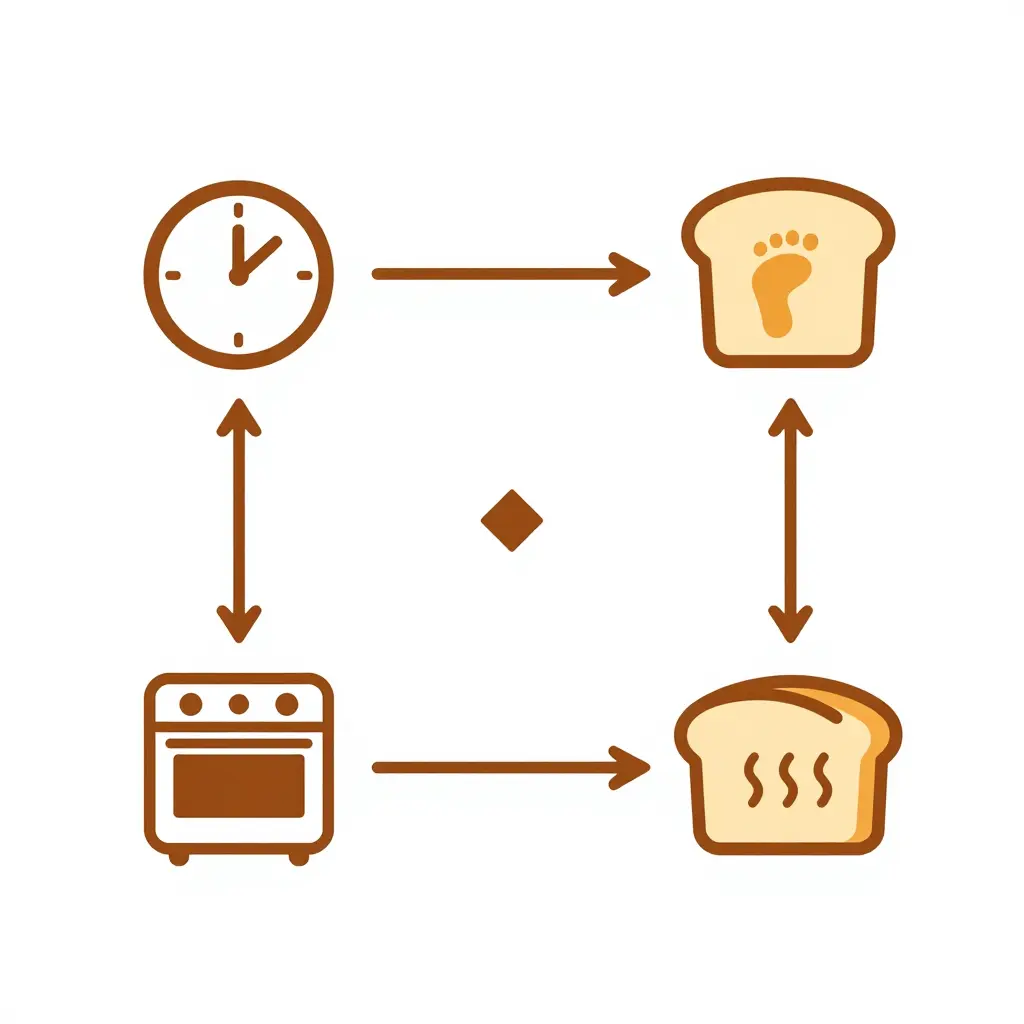
That is why the nearest shop is not always the best answer at 7am. It is the difference between saving a few steps and settling for yesterday’s bake. A panadería two blocks farther that pulls trays from the oven at 6:45am can beat the corner shop whose shelves were stocked hours earlier.
Frequently Asked Questions About Fresh Bolillo and Nearby Bakeries
Is the closest panadería always the freshest?
Not necessarily. The shop closest to your door may have baked its trays hours earlier or sell through slowly, leaving morning bread on the shelf well past its prime. Real freshness depends on baking schedules and turnover speed, not on how few steps you take to get there. Convenience is nice; it is just a poor proxy for quality.
What time do bakeries bake bolillo?
Most Mexican bakeries fire their first bolillo batch between 4 and 6 a.m., then bake again in the mid-morning, often around 8 to 10 a.m., with some shops adding an afternoon or early-evening round. For the freshest possible loaf, arrive shortly after one of those bake windows rather than grabbing whatever is left at midday. A quick call ahead can save you a wasted trip.
How can I tell if a bolillo is fresh?
Give it a gentle squeeze: a fresh bolillo springs back, feels surprisingly light, and has a crisp golden crust with a soft, faintly warm interior. Pass on any loaf that feels hard, heavy, or unusually dry, since those are clear signs it has been sitting out. When you start a search for panaderías cerca de mí, look for reviews that mention baking times and early-morning service. You can also compare shops and hours with this guide to finding a panadería near me before heading out.
Why does a nearer shop sometimes have older bread?
A nearby shop may bake in small quantities or restock just once a day, so its bread sits longer on display. High foot traffic does not always mean fast turnover, and some places re-bag leftover morning bread for the afternoon crowd. That is how the closest panadería near you can quietly carry the stalest loaves in the neighborhood.
Does a farther bakery ever have fresher bolillo?
Absolutely. A bakery a few blocks farther may bake more frequently or sell out faster, so the bread in your hands is genuinely fresher. Distance is a weak proxy for quality; timing and turnover tell the real story. The next time you want a fresh bolillo, let the clock guide your choice, not the map.
Conclusion: Convenience Is a Starting Point, Timing Is the Real Win
The closest shop will almost always be the easiest answer when you search for panaderías cerca de mí. It saves time, gas, and a detour across town. But convenience and freshness are two different things, and if you want a warm, crackly fresh bolillo at 7am, the nearest door is not necessarily the right one. What decides it is the bake schedule and whether it lines up with the moment you walk in.
A panadería near me that looks quiet at sunrise may have pulled its bolillos from the oven hours earlier, while a shop a few blocks farther may be sliding trays out right when you arrive. Fresh bread follows the timing, not the map. Rather than chasing distance alone, tune into when each bakery bakes: ask, observe, and let routine guide your choice.
You can put that awareness to work today. Next time you plan a bread run, start with the shops closest to you, then compare their baking rhythms until you find the one that matches your schedule. For a closer look at neighborhoods and options, explore Latin bakeries near me. A little bake-timing awareness is all it takes to find your warmest, freshest bolillo.