
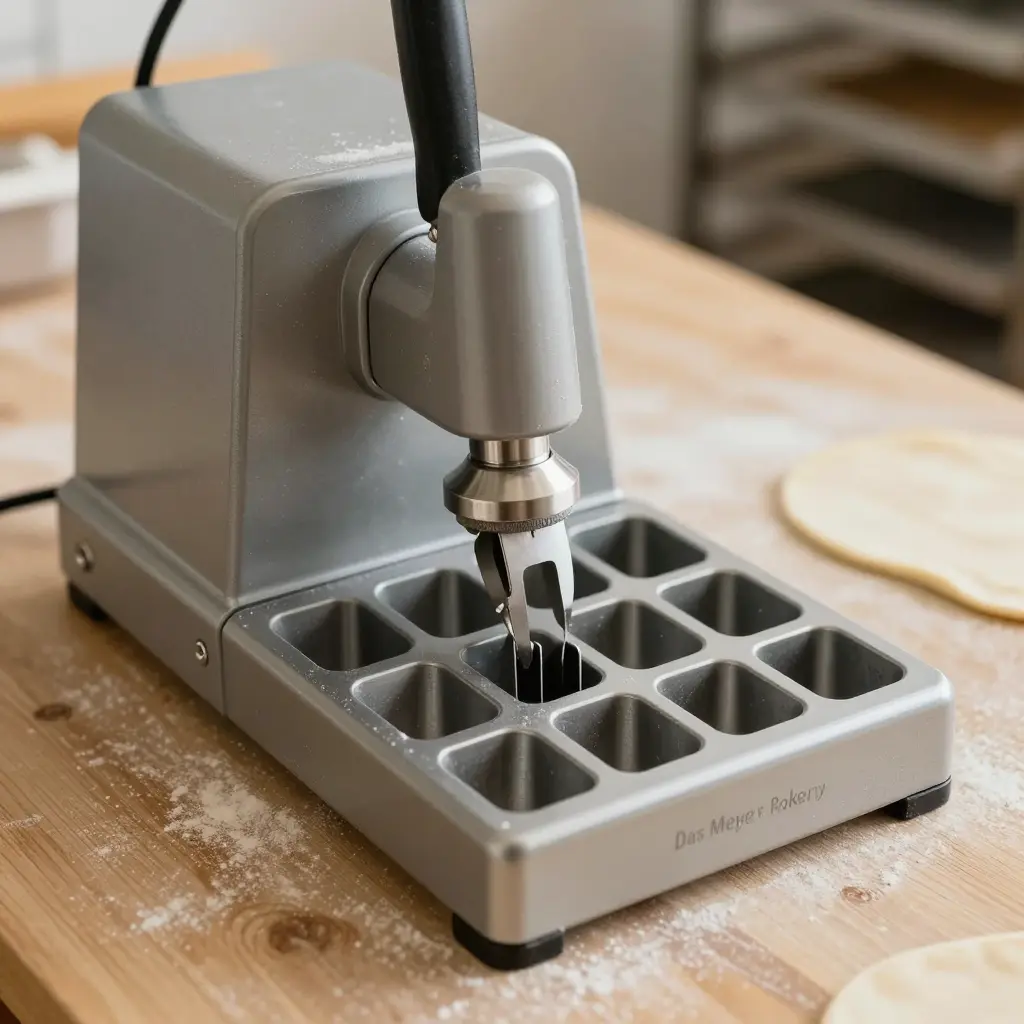
Das Meyer Bakery Dough Dividers: Weight Drift After Blade Wear, and Three Checks Before Ordering Parts
A dough divider loses portioning accuracy as its blades wear. That slow loss of precision is called weight drift: each cut leaves a slightly different amount of dough, so a 100-gram roll can creep toward 108 or 92 grams with nothing visibly wrong with the machine. Because the change is gradual, it rarely triggers an alarm until the scale readings are impossible to ignore.
Oversized portions eat more flour, butter, and filling than the recipe and pricing assume. Undersized pieces get combined, reshaped, or thrown out. Buns and pastries that vary in size draw complaints about value and appearance, and across a full production week the small differences add up.
This is for bakers, pastry chefs, and equipment managers who keep dividers running in production. Before you spend money, compare your setup against the Das Meyer Bakery equipment notes, then run three checks to confirm the blade is really the source of the problem.
Why Dough Divider Blades Drift Out of Tolerance
The mechanism is predictable. It starts at the blade edge and ends at the scale.
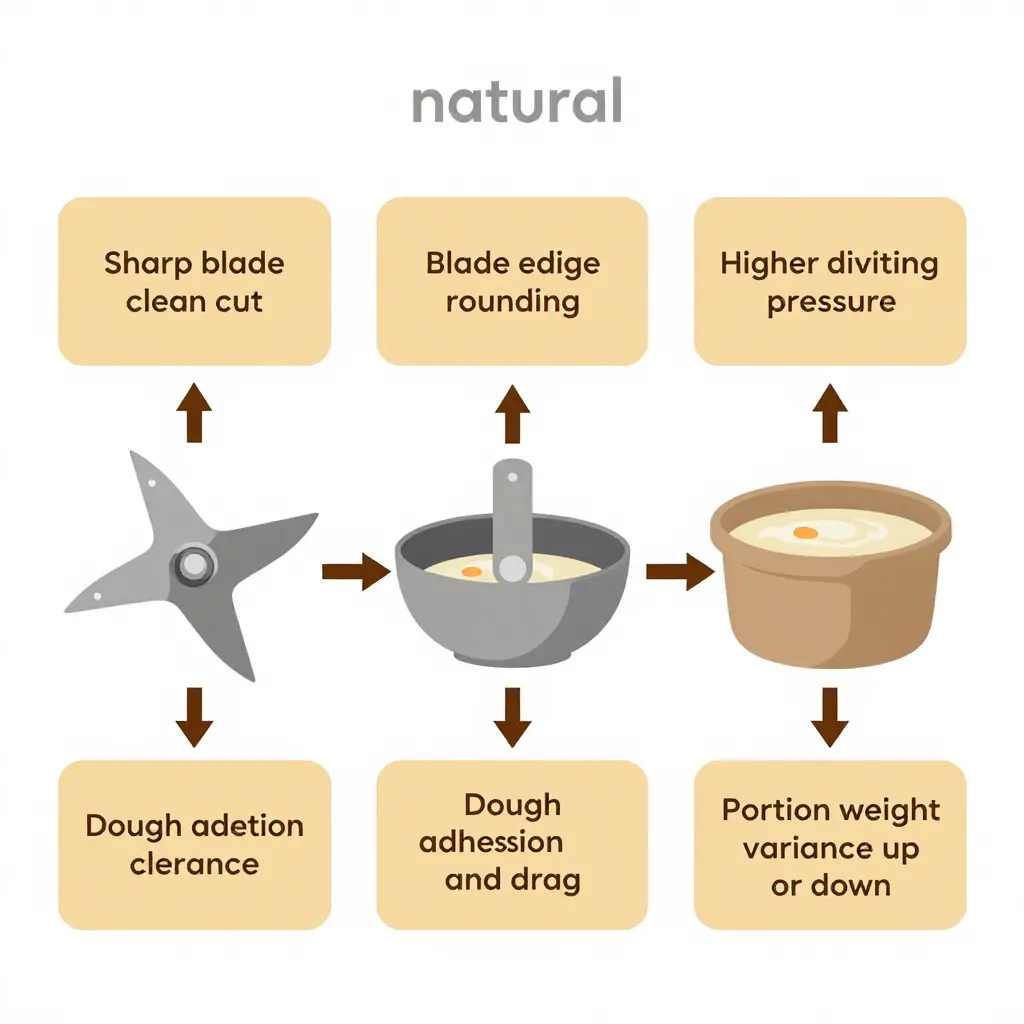
Symptom: weights creep away from target. A divider that once held tight tolerances starts producing pieces that run heavy in one pocket and light in the next. The shop scale, not the recipe, is usually the first clue.
Cause: the blade edge rounds over. Every cut dulls the edge. Over thousands of cycles, a sharp shearing edge becomes a blunt profile that presses and tears dough instead of slicing it.
Effect: cutting clearance grows. As the edge wears, the gap between the blade face and the dividing chamber walls widens. Dough squeezes into that clearance instead of being separated cleanly, so the volume delivered to each pocket shifts unpredictably.
Compounding factor: adhesion and drag. A roughened, rounded edge grabs sticky dough and drags material across the chamber as it travels, pulling mass out of one pocket and pushing it into the next. Wetter or warmer doughs drag more.
Pressure can backfire. Operators often raise dividing pressure to force a clean cut from a tired blade. On a worn edge, the extra force flexes the blade and compresses dough rather than dividing it, producing more weight variance, not less. A sharp blade needs minimal pressure; a dull one punishes every extra pound of force you add. This is the trap behind many misdiagnosed faults, and the reason seasoned crews keep a record of their Das Meyer Bakery equipment settings over time.
Net result: drift up or down. Depending on hydration, dough temperature, and how aggressively the pressure was adjusted, blade wear can push portion weights upward or downward. The drift is rarely linear, which is why a divider can pass one spot check and fail the next. Tracking weight variance against blade age tells you whether the edge or the pressure setting is the real culprit.
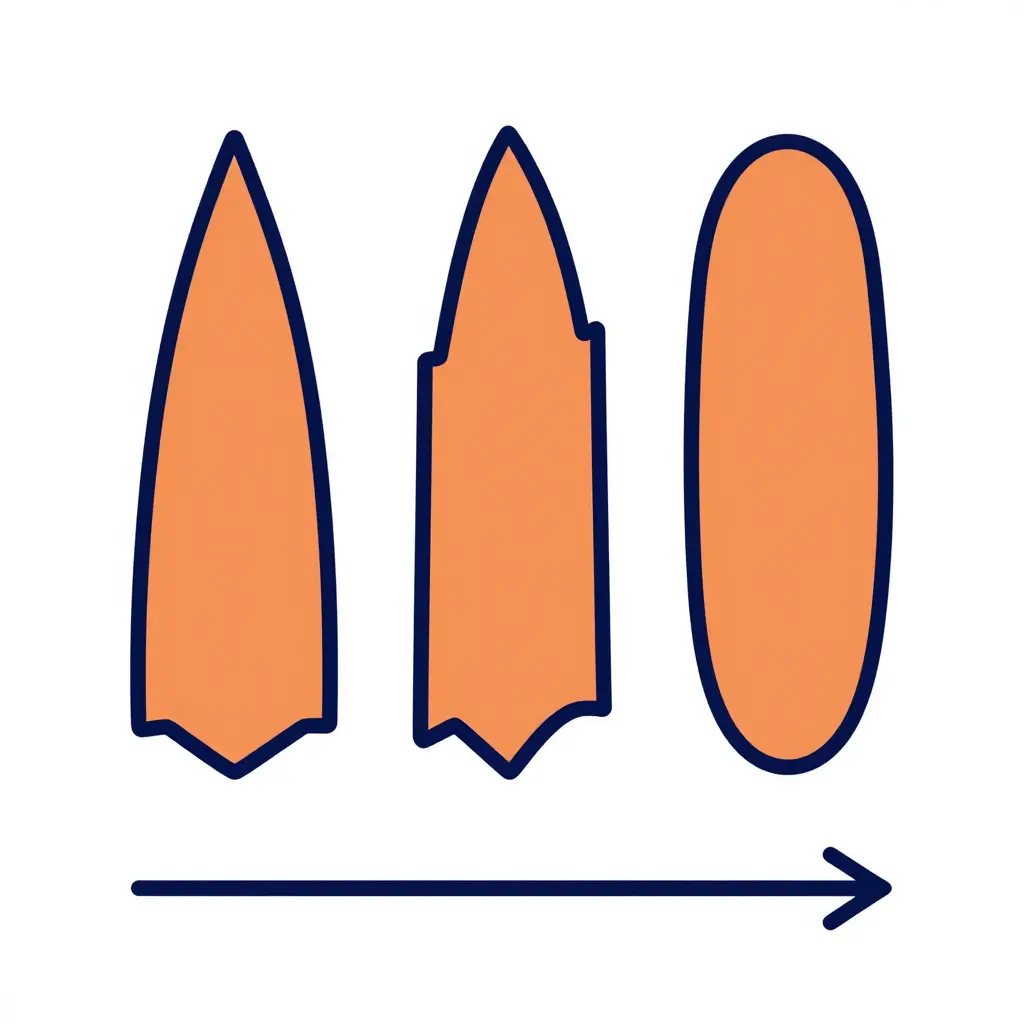
As a dough divider blade dulls from a sharp edge to a rounded one, cut portions drift heavier or lighter over time.
Three Checks Before Ordering Parts
Run these three checks before you buy new blades. They take less than an hour and usually settle the question.
-
Log portion weights across a full run. Weigh 20 to 30 consecutive pieces and write down every number. Small, steady changes point to early weight drift; random spikes point somewhere else. A clear upward or downward trend is what justifies a parts order.
-
Inspect the blade edges and cutting clearance. Pull the blades and look for nicks, rounding, or shiny wear. Use a feeler gauge to check the gap between the blade and the cutting block. If that gap has opened up, dough squeezes through, and that alone can cause uneven weights.
-
Verify settings and mechanical pressure against spec. Recheck pressure, stroke, and adjustment values against the equipment manual. A pressure setting that slipped even slightly shifts every portion, so confirm the mechanical pressure is right before blaming worn blades.
If all three checks point to the blades, order the part. For a reference on how a well-tuned machine should run, see this guide to das meyer bakery equipment.
Blade Condition vs. Weight Drift: Diagnosis Table
On most dividers, stubborn weight drift traces back to the edge: the cutting edges round over, dough smears instead of slicing cleanly, and portions quietly climb or fall. The table maps what you actually see on the blade to the weight behavior it produces, so you can diagnose the problem in minutes instead of guessing your way through the parts catalog. The Das Meyer bakery hub has more on the machine itself.
| Blade Condition | Typical Weight Drift | Cutting Clearance | Recommended Action |
|---|---|---|---|
| New / sharp | Under 1% (within tolerance) | At factory spec (roughly 0.10 to 0.15 mm) | No action – log baseline weights and clearance for reference |
| Lightly rounded | 1 to 3% | Slightly above spec | Re-sharpen at the next scheduled maintenance; spot-check weights daily |
| Moderately worn | 3 to 6% | Noticeably enlarged | Sharpen or replace soon; recalibrate the divider against known test dough |
| Heavily rounded | 6 to 10% | Well beyond spec | Replace blades; re-check knife alignment and return springs |
| Damaged / chipped | Over 10%, erratic and inconsistent | Irregular or uneven | Replace immediately; inspect the whole cutting assembly for related damage |
When your weight drift tracks with the physical condition of the blades, you have your answer – and a sharpening or a replacement almost always beats a costly parts order.
How to Run Each Check Correctly
Run the three checks in this order, whether you service a single Das Meyer dough divider or a whole production line. Each one tells you whether the next is worth your time, and together they tell you whether the fix is a part, a setting, or a recalibration.
Check 1: Portion Weight Sampling
Sample at least 12 consecutive portions from a single batch, taken from the middle of a run rather than the first few pieces. Weigh each portion on a scale that reads to 1 gram, and log the result by position. The spread is the difference between the heaviest and the lightest portion; note the average as well. A spread within 2 percent of your target weight is normal. A spread above 5 percent, or a steady drop in weight across the run, points to a mechanical problem rather than your recipe.
Check 2: Blade Wear Inspection
Switch off and lock out the dough divider before you touch anything. Remove the blade assembly in the manufacturer’s sequence, and inspect the blade edges with a cloth or a cut-resistant glove, never by sliding bare fingers along the cutting edge. Look for rounded corners, nicks, burrs, and a polished shininess that signals metal loss. Compare the edge profile against a new blade if you have one on hand. Visible rounding or chipping on the edge is genuine blade wear and usually cannot be sharpened back to spec.
Check 3: Clearance and Settings Verification
Slide a feeler gauge between the blade and its matching surface to measure clearance at three points: both ends and the center. Uneven readings mean the assembly is misaligned. Verify the divider’s scaling ratio, piston pressure, and dwell time against the manual, and confirm the hopper and knife settings match your current dough. Recalibrate the scale zero, then re-run ten portions to confirm the readings hold.
Reading the Results
If clearance is even and settings are correct but weight drift remains, order the blades. If clearance is uneven or the settings have drifted, adjust and recalibrate first and re-test before spending money. Documenting each reading turns a parts order into a decision backed by data.
Weight Drift vs. Blade Life
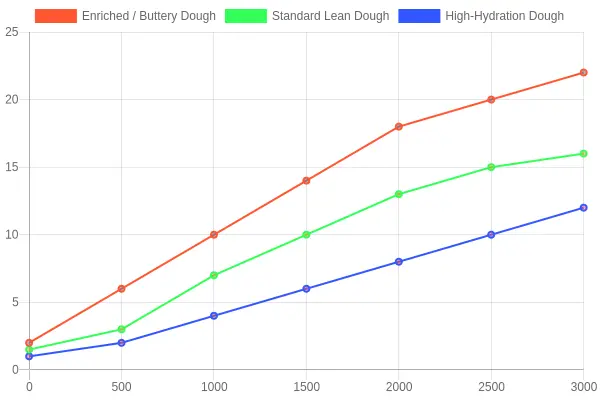
Average portion weight deviation climbs as blade hours accumulate. Denser, butter-rich doughs drift fastest, so portion accuracy quietly degrades as blades wear.
Each line rises as the hours stack up. A fresh edge cuts cleanly; an aged edge smears and drags, and portions gain a few grams nobody asked for. Heavier, enriched doughs push the drift higher and earlier, which is why two bakeries running the same divider can disagree about “normal” weights. If your numbers are wandering up like these lines, see what proper care looks like at Das Meyer Bakery.
Ordering the Right Parts the First Time
Once the checks confirm that weight drift traces back to worn blades, the next step is an order that fits on the first attempt. A few minutes of verification now saves reshipping and more weeks of underweight or overweight dough pieces.
Match the part number to the exact divider model
Two dough dividers can look identical on the production floor and still take blades cut to different geometries. Before ordering, record the divider’s model and serial number from the machine plate. Then cross-reference the blade part number against the specific manual for that build, not a photo or a generic “fits most” listing. A blade that is one revision off may bolt in cleanly but cut at the wrong angle, which reintroduces the exact weight drift you are trying to fix.
Confirm material and coating options
Blade material and coating change how the edge holds up under pressure and how dough releases from the cut. Match the original specification, because mixing specifications across a set can create uneven wear.
| Option | Typical use |
|---|---|
| Standard stainless steel | General doughs, balanced durability |
| Hardened alloy | High-volume runs, abrasive doughs |
| Non-stick coated (e.g., PTFE) | Sticky or high-hydration doughs, easier release |
Decide between blade sets and individual blades
Many dividers are sold as matched sets that are ground together to keep all cutting edges uniform. Replacing a single blade inside a worn set can leave mismatched edges and uneven dough weights across pockets. When wear is even, a full set is usually the correct order; reserve single blades for isolated damage such as a nick.
Confirm quantities and spares
Count the pockets on your divider to confirm how many blades the machine actually uses, then add one spare set for the shelf. Standardizing on the correct part number, and keeping a spare, shortens downtime during a busy production window.
Why the wrong part costs more
An incorrect blade often installs without complaint, so the weight drift continues and you keep chasing a problem that was already diagnosed. The result is recurring rework, rejected batches, and repeated parts purchases that exceed the price of ordering correctly once.
For operations running Das Meyer Bakery dough dividers, the same discipline applies: treat blade wear as a measurable maintenance item and order against the documented specification. Weights stay consistent, and every set you buy lasts longer.
Related Equipment and Bakery Resources
Blade wear tends to arrive alongside other maintenance and production questions. The pages below connect equipment care to what you actually bake and sell.
-
For a closer look at the machines behind your line, the Das Meyer Bakery dough dividers guide walks through blade assemblies, replacement parts, and the checks that keep portions accurate.
-
If you sell sweet breads, the pan dulce near me open now page shows how shops present and rotate these items, a useful reference when you compare divider output to finished product.
-
Around the holidays, the rosca de reyes resource explains the seasonal ring bread and the portion control that keeps every slice even.
-
For another established production benchmark, the Don David Bakery profile offers context on how traditional bakeries organize their equipment and daily workflows.
-
Finally, the welcome post introduces the site and explains how the equipment notes and recipe guides fit together.
Whether you are ordering a fresh blade or simply tracking a slow drift in weight, these pages give you the background to decide.
Frequently Asked Questions
How often should dough divider blades be replaced?
There is no fixed calendar. Intervals depend on usage volume, dough abrasiveness, and cleaning habits. A dough divider that runs every day in a busy bakery often needs fresh blades every six to twelve months, while lightly used machines can last longer. Log your blade changes and watch for weight drift so you can build a replacement schedule around your own production pattern.
Does weight drift always mean the blades are worn?
No. Weight drift is a symptom rather than a diagnosis. Worn blades are a common reason a dough divider drifts away from its target weight, but loose locking nuts, dirty pistons, room temperature swings, and dough formula changes cause it too. Clean the machine and test its settings first to confirm blade wear before you order parts.
How can I tell blade wear from a settings problem?
Confirm the divider is level and the ram pressure is correct, weigh the same dough batch several times to see how consistent the variation is, and inspect the blades for nicks, rounding, or visible gaps. A dough divider with worn blades produces gradual, steady weight drift, while a settings problem usually causes sudden or erratic changes. If weights shift right after an adjustment, the issue is probably the setup, not the steel.
Must replacement blades match the exact model?
Yes. Blades should match your specific dough divider model and manufacturer. Off-brand or mismatched blades can seat incorrectly, damage the cutting chamber, and introduce fresh weight drift instead of solving it. See Das Meyer bakery dough dividers for the part-number reference, order from a verified supplier, and confirm the part number against your machine plate before buying.
How much weight drift is acceptable?
Small variation is normal, and most bakeries tolerate roughly one to two percent of the target weight. Anything beyond that range, especially a trend that keeps growing, points to a problem worth investigating on your dough divider. Monitor weight drift weekly so you spot it before it affects portion cost and product consistency.