
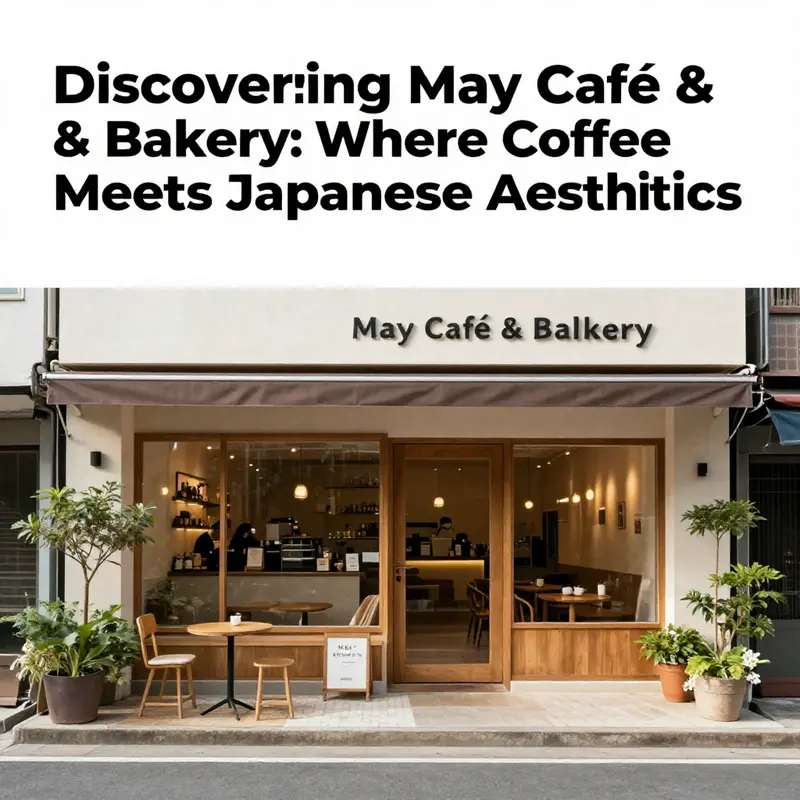
In the vibrant city of Shanghai, May Café & Bakery stands out as a beacon of specialty coffee and culinary artistry. This unique establishment, led by a master barista trained in Japan, marries meticulously crafted hand-brewed coffee with the elegance of Japanese design. The café not only serves exquisite coffee but also evokes a serene ambiance that invites patrons to enjoy a full sensory experience. This exploration will take you through the dual lens of May Café’s coffee innovation and its aesthetic ambiance, illustrating its significance for business owners seeking to enhance their offerings.
May Café & Bakery: Quiet Craft of Coffee and Japanese Aesthetics in Shanghai

In Shanghai’s Gu Bei district, a narrow rectangle of calm sits among the city’s glass and neon. May Café & Bakery is more than a caffeine stop; it is a deliberate space where craft, design, and ritual form a shared language. The cafe’s quiet charisma arises from patient attention to detail: a space that feels intimate and expansive, a menu that speaks softly with authority, and a daily rhythm that honors precise work behind each cup. The idea of coffee by day and a small selection of drinks by night has grown into a shelter for those who slow down to notice aroma, the careful tilt of a pour, and the glow of a ceramic cup.
The space feels like a quiet evolution. Once a traditional Japanese restaurant, it preserves a long, narrow footprint that feels like a modern takoyaki counter in reverse: a window into the barista’s craft rather than a barrier. The counter is the stage; the baristas are actors; guests sit shoulder to shoulder with the ritual. This creates gentle immediacy: you watch the grind, hear the hiss of hot water, sense the precision of weighing and timing. By day, it invites contemplation; by night, lights soften, and the room shifts into an intimate izakaya mood. The design respects traditional orders of space while reimagining them for a contemporary cafe culture, blending familiar techniques reinterpreted with calm rigor.
At the heart of May Café’s identity lies dedication to precision and artistry in every cup. The coffee program centers on four single-origin beans from diverse regions and five blends offering a map of flavor. Not chasing loud trends, but balance, nuance, and honest reflection of origin. One profile presents a floral bouquet with bright fruity notes that brighten as brew cools, with delicate caramel sweetness. Its counterpart leans toward depth: full-bodied with notes of dark chocolate, toasted nuts, and a subtle smoky edge. What unites them is a tasting philosophy that respects origin stories while guiding toward a clean, lingering finish.
The ritual of making a cup is a conversation between brewer, beans, and guest. A deliberate weighing of 12 grams of grounds, controlled pour, bloom as water meets coffee, steady meditative pour. An exact water temperature of about 85 degrees Celsius, and a 1:16 ratio. The result is a narrative: aromas fill the air; first sip confirms the floral and berry notes; as cup evolves you discover a clean, precise finish. It is an invitation to slow down, listen to tiny sounds—the crackle of the kettle, the soft thrum of the grinder—and align pace with the cup’s tempo. This is coffee as craft, space for reflection, and a shared ceremony between maker and guest.
An essential part of the May experience is engagement with ceramic ritual. Guests select their own cup from a curated set of Japanese-inspired wares, chosen for texture and glaze catching light and interacting with heat. The act of choosing becomes part of the sensory arc, elevating the moment of drinking from ordinary to reverent. The cups carry quiet dignity, each piece bearing a trace of place and craft—handmade, imperfectly perfect, and perfectly suited to the coffee it holds. This moment binds the guest to a longer lineage of pottery and care, reminding that the ritual of coffee is as much about vessel as liquid, and that the space’s aesthetic serves tasting as much as technique.
The bakery portion contributes to immersion into refined craft. Pastries reflect understated Japanese-inspired discipline, where texture, balance, and restraint govern the dessert experience as surely as the coffee governs the drink. There is a sense of daily practice—recipes evolve with the seasons, techniques refined through repetition, and a commitment to delivering harmonious sweetness that never overwhelms the palate. The pairing philosophy emphasizes contrast and balance: a pastry’s crumb and sweetness harmonize with the coffee’s acidity and body, inviting the guest to explore how opposing textures and flavors can coexist in a single bite and sip. The bakery, though secondary to the coffee in function, sits at the heart of the space’s emotional map, reinforcing the idea that May Café & Bakery is a total experience rather than a simple stop on a caffeine itinerary.
Beyond the craft and the décor lies a deliberate rhythm that makes the space a sanctuary from the city’s tempo. The script of the day—the early coffee, late drink ethos—carries an implicit invitation to inhabit different emotional states as the light changes. The bilingual menu signals hospitality that recognizes both local and international guests, guiding the experience with careful courtesy rather than a loud show. The surrounding greenery outside a single wooden table offers a quiet microcosm of urban life passing by—an open reminder that even a short moment can become a memory when set against the right atmosphere. In this way, May Café & Bakery is less a storefront and more a curated ritual, a place designed to shelter contemplation and foster connection through the shared acts of brewing, tasting, and savoring.
For readers who crave a similar calm, craft-led atmosphere elsewhere, consider the Dulce Vida Café, a space that shares this quiet devotion to atmosphere and craft. The note can include a link: https://dulcevidabakery.shop/dulce-vida-cafe/
As Shanghai continues to expand its café culture, May Café & Bakery stands as a model of how space, craft, and design can converge to create a meaningful, immersive moment. Its strength lies not in chasing the newest trend but in keeping faith with technique and atmosphere. In the careful measurement of a cup, in patient vessel selection, in deliberate pacing of lighting and sound, the cafe tells a story of care, tradition refracted through a contemporary lens, and a city that values quiet excellence as much as spectacle. The result is a place where guests do not simply consume coffee or pastry; they participate in a practice that celebrates preparation, attention, and sensory subtleties that make each visit memorable. It is a rare experience—inviting not just tasting but listening, not merely drinking but inhabiting a moment that lingers after the cup is emptied.
External resource: ArchDaily feature on the space; link: https://www.archdaily.com/1568274/may-cafe-and-bakery-fa
Brewing Quiet Mastery: May Café & Bakery as a Synthesis of Japanese Craft and Shanghai’s Café Culture

In the heart of Shanghai’s historic night-and-day rhythm, May Café & Bakery stands as more than a place to sip and bite. It is a careful listening space where everyday routines are tuned into a slower tempo, where the clink of cups and the hush of conversation feel intentional rather than incidental. The cafe reframes a traditional Japanese dining setting into a modern, urban sanctuary. It occupies a space that used to host a Japanese restaurant, yet its transformation centers on a different kind of hospitality: the patient, exacting craft of coffee making paired with the quiet beauty of Japanese-inspired design. Walking in, one notices the restraint of the interior. The design favors clean lines, natural materials, and soft lighting that caresses every surface with the suggestion of dawn and dusk. The atmosphere invites a pause, a moment to observe the work happening along a long, straight counter that runs the length of the room. Guests sit on a single bench facing the open kitchen, a deliberate choice that dissolves the boundary between spectator and maker. It is as if the space itself has learned to slow down, to encourage a mindful encounter with taste, texture, and aroma. The aesthetic language is unmistakably Japanese in its elegance and restraint, yet it speaks fluently to a Shanghai audience that values precision, balance, and quiet refinement. The effect is not theatrical showmanship but a kind of curated honesty, where what you witness is what you savor later in the cup and the pastry.
The counter and seating arrangement are not merely functional; they are a design philosophy in motion. Guests are invited to witness the choreography of a barista who treats coffee preparation as a performance of discipline and care. The barista’s tools gleam with deliberate purpose, and the workflow unfolds with a quiet rhythm: calibrated weighing, careful grinding, intentional filter preparation, and a sequence of pours that bloom into a cup with a defined character. The openness of the kitchen dissolves the fear of artifice and replaces it with trust. You are not merely ordering a drink; you are stepping into a protocol that respects the ingredients and the person who curates them. The overall ambiance—minimalist, warm, and subtly lit—echoes the Japanese idea of ma, the space between elements that heightens perception. The result is an interior that feels serene yet alive, like a stage where craft takes center stage and every action speaks about restraint and purpose. It is this sense of calm that makes the coffee and pastries feel less like commodities and more like a shared ritual.
Within this sanctuary of quiet, the beverage program rests on a handful of singular origins and a thoughtful set of blends. The sourcing philosophy leans into quality, selecting beans from a few trusted origins to reveal distinct profiles—notes of brightness, floral nuance, and a clean finish. Beyond single-origin offerings, the menu highlights a curated set of blends that balance aroma, body, and aftertaste. The baristas treat each cup as a small, deliberate experiment: precise weighing, controlled extraction, and a patient approach to the bloom and the pour to coax out aromatic compounds and sweetness. While the specifics of each cup are kept deliberately understated, the intention is clear—the craft favors clarity, balance, and an evolving aroma that invites the taster to follow the cup as it cools and opens new facets of flavor. The aromatic complexity may begin with vibrant floral and bright fruit-driven acidity, then gently deepen as caramel sweetness emerges and lingers with a clean finish. These profiles are not static portraits; they are living conversations that shift as the liquid travels from the pot to the cup and into the air around you.
The pastry program is a natural extension of this ethos. It is built around a philosophy of seasonality and restraint, where every bite is tethered to quality ingredients and careful technique. The pastry cabinet glows with the soft light of a room that values texture as much as taste. The approach to baking reflects Japanese sensibilities—delicate textures, restrained sweetness, and a reverent respect for the balance between lightness and substance. Yet the pastries do not feel derivative; they resonate with a modern café culture that embraces global influences. Each pastry is a quiet, defined moment, designed to complement the coffee rather than merely accompany it. The pairing logic is less about bold contrasts and more about a harmonious conversation: the pastry provides a counterpoint to the cup’s acidity or sweetness, or it amplifies a savory note that might appear in a later bite. This synergy embodies the broader philosophy of the space: a mindful fusion where technique, ingredient, and atmosphere converge to create a refined, immersive experience.
What makes May Café & Bakery particularly compelling is its operating rhythm, a refined choreography that mirrors its design principles. It embraces a dual tempo—morning coffee that invites focus and clarity, followed by an evening atmosphere where the space softens and takes on a different, almost intimate character with the addition of drinks that invite reflective conversation. The day unfolds like a quiet performance, offering a spectrum of moods rather than a single, loud statement. In this sense, the café becomes a personal theater for the senses, a place where one can observe the discipline of craft and then participate in it through a deliberate tasting. The open kitchen is more than a display of skill; it is a transparent apprenticeship, where guests gain a sense of the steps that lead from raw beans to a cup infused with aroma and nuance. Observing the baristas at work fosters a deeper appreciation for the artistry involved—an appreciation rooted in the practices of precision and patience rather than bravado. It is a reminder that excellence in a café is often a quiet achievement rather than a loud declaration.
The social dimension of the space complements its sensory sophistication. Conversations drift in soft tones, as if the walls themselves were listening and choosing to retain a sense of calm. Patrons come for different reasons: some seek a moment of stillness to contemplate a work, others crave a comforting ritual that anchors their morning or evening. The pastries and light bites contribute to this atmosphere by offering textures and flavors that align with the coffee’s mood, never overpowering it. The menu’s approach to sustainability—seasonal ingredients, responsible sourcing, and careful preparation—speaks to a broader ethical stance that resonates with a city increasingly attentive to how food and drink are conceived, produced, and shared. The result is a space that feels both intimate and cosmopolitan, a quiet influence within a city whose energy can be exhilaratingly loud at other moments of the day.
Beyond its walls, the experience of May Café & Bakery invites comparison with other craft-forward spaces where design and gastronomy intersect. The choice to present a unified, restrained aesthetic—where the art lies in the process as much as in the plate or cup—places the cafe in a lineage of global practice that honors meticulous technique and mindful consumption. For readers who wish to understand how such spaces talk to one another through craft and atmosphere, a related example from the broader artisan landscape offers a useful parallel: Dulce Vida Bakery. The link leads to a bakery that also privileges craft, balance, and a quiet commitment to quality, highlighting how small, crafted spaces contribute to a larger culture of artisanal hospitality. This cross-pollination—between the Japanese-inspired discipline of May Café & Bakery and other regional expressions of artisanal baking—helps illuminate why the café feels like a place where making and tasting become acts of reverence rather than routine.
In the end, May Café & Bakery stands as a compact manifesto: a belief that beauty in daily ritual emerges not from flashy displays but from the exacting, patient labor of skilled hands. The design speaks of space and silence; the coffee speaks of origin, process, and balance; the pastries speak of seasonality and care. Together, they create an experience that transcends the ordinary cafe moment. Visitors leave with more than a memory of flavor; they carry a sense of having witnessed craft as a living practice, something that can be observed, learned, and—most importantly—shared. The shop’s fusion of Japanese aesthetics with modern culinary art offers a gentle, powerful invitation to slow down, to observe, and to partake in the quiet, generous rituals that sustain both body and imagination. As Shanghai continues to evolve, spaces like this remind us that the deepest forms of hospitality often arrive through the simplest acts—the deliberate pour, the patient bake, the mindful pause—made possible by a design that honors the dignity of craft. External reference: https://www.maycafe.com/zh/menu
Final thoughts
May Café & Bakery represents more than just a coffee shop; it illustrates the power of integrating culinary excellence with aesthetic appeal. By focusing on high-quality coffee and a serene atmosphere, May has created a unique niche in the Shanghai market that other business owners could learn from. The fusion of coffee craftsmanship with Japanese design principles presents actionable insights for enhancing customer experience and engagement in any culinary endeavor.