
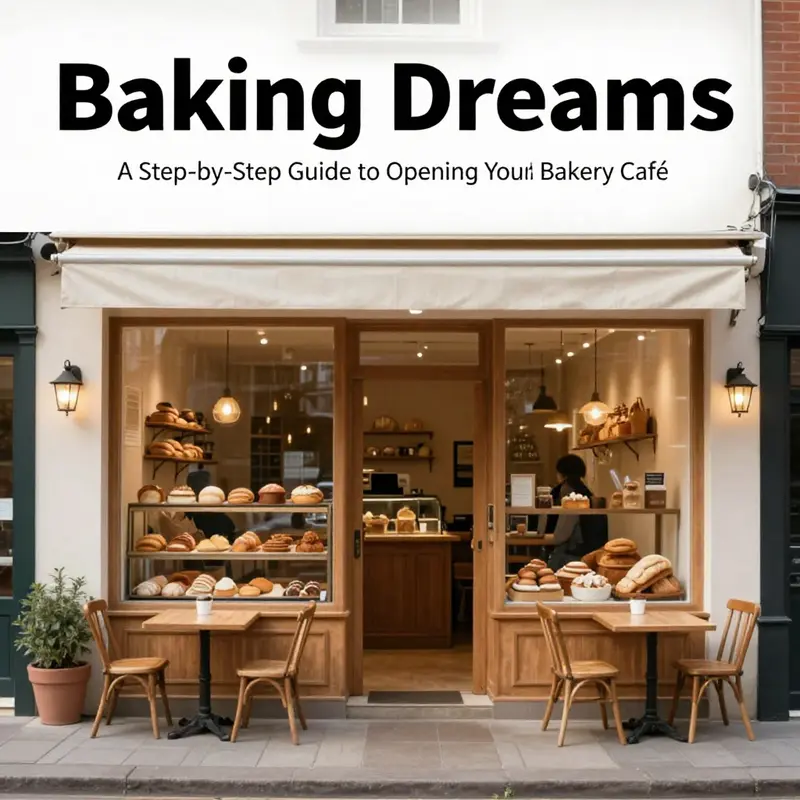
Starting a small bakery café can be a delightful endeavor, marrying the art of baking with an inviting culinary experience. This venture requires thorough market understanding, legal knowledge, and spatial efficiency. Whether you’re a passionate baker or a savvy business owner, this guide will elucidate the necessary steps to ensure your bakery café thrives, from identifying your target market to navigating legal regulations and effectively planning your café layout. Equip yourself with the insights needed to transform your vision into a thriving business, making your café a beloved community destination.
Shaping Your Bakery Café: Market Research That Becomes a Memorable Concept
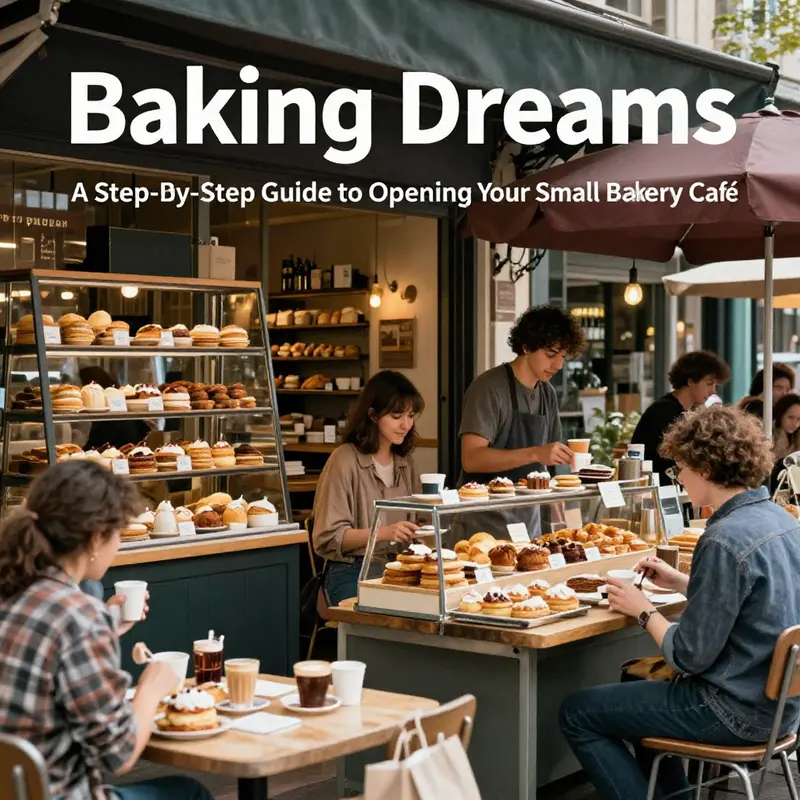
From Market Research to a Distinctive Concept
Successful bakery cafés begin with focused research and a clear, actionable concept. Start by defining the customer you want to serve. Gather demographic details like population size, age bands, household income, and commuter patterns within a three-to-five kilometer radius. Those numbers let you decide whether to target busy commuters, university students, neighborhood families, or remote workers. Combine data with observation: stand near a prospective site at morning rush, lunchtime, and late afternoon. Note who walks by, where they head, and how long foot traffic lasts. These simple on-site checks often reveal patterns that raw data misses.
Map every nearby food and beverage option. Look beyond obvious bakeries to include coffee bars, quick-service restaurants, and grocery delis. For each competitor, record their busiest hours, price range, menu focus, and customer experience cues. Identify consistent weaknesses across the neighborhood. Maybe nearby shops lack comfortable seating, or they offer limited healthy choices. Those gaps point to clear opportunities. A bakery café that offers a quiet workspace with reliable Wi‑Fi, or that serves a range of low-sugar and plant-based pastries, can capture unmet demand.
Trends should shape your concept without dictating it. Consumers now expect clearer ingredient sourcing and eco-conscious packaging. They increasingly choose places that align with lifestyle values, such as locally milled flour, ethically sourced coffee, or compostable takeaway containers. Incorporate trends selectively. Choose a focus you can execute well every day. A narrow, consistent proposition beats a broad menu that stretches your team thin.
The sensory experience matters more than many operators expect. An in-house oven and visible baking activity create aromas that draw people inside. The smell of fresh bread is a powerful, continuous advertisement. If you plan to bake on-site, design the layout so customers can see key processes without crowding the work area. This visibility builds trust and reinforces a handcrafted brand story.
Turn research into a crisp Unique Value Proposition. A UVP answers what you offer and why it matters. It might highlight superior craft sourdough, a neighborhood brunch destination, or quick, high-quality grab-and-go for commuters. Whatever it is, make it specific and defensible. If your UVP relies on ingredient quality, secure reliable suppliers before launch. If it depends on atmosphere, prototype seating layouts and test them with friends or small focus groups.
Brand personality should be consistent and felt in every detail. Decide whether your café will feel rustic and homey, sleek and modern, or playful and colorful. This choice drives design, packaging, staff uniforms, and the tone of your communications. Ensure that the visual identity supports the UVP. For example, a plant-based, health-forward concept benefits from clean, natural visuals and clear labeling. Design choices should make it easy for customers to understand what you stand for in seconds.
Menu strategy follows naturally from your concept. Start narrow and excel at a core range. A compact menu with 15 to 20 items helps maintain quality and predictability. Include a small selection of signature breads, a few pastries, a couple of breakfast or brunch items, and a concise beverage list. Standardize recipes with measured weights and clear methods. This reduces variation and speeds staff training. Plan product rotation by season to keep the menu fresh and drive repeat visits.
Price positioning must match both your brand and the local market. Use competitor pricing as a baseline. If you position as premium, invest in packaging, ingredient sourcing, and presentation to justify higher prices. If you aim for value, focus on volume, speed of service, and consistent product quality. Either way, model costs carefully. Factor in ingredient waste, labor for baking and front-of-house, rent, and expected footfall. A commonly used rule is to keep rent under a percentage of projected monthly revenue; adjust this target for your local realities.
Location intelligence goes beyond rent and footfall. Analyze nearby anchors, transit links, office density, and residential trends. A storefront near offices will perform differently than one in a residential pocket. Look at future developments and zoning plans. A new office complex or residential building can change traffic patterns quickly. Also consider sightlines and signage: a visible storefront on a pedestrian route will capture casual visits more easily than a tucked-away space.
Translate research into operational decisions early. If your concept requires a bake-on-site model, allocate space and equipment budget accordingly. If speed matters, design a streamlined service flow. Draw a simple process map from ingredient delivery through baking, assembly, display, sale, and cleaning. Look for bottlenecks and eliminate them before opening. Prototyping these flows during a soft opening helps staff adapt and gives you early data to refine production volumes.
Test assumptions with low-cost experiments. Host pop-ups at markets, partner with nearby shops for collaborative mornings, or run tasting nights. Collect structured feedback. Ask what customers liked, and what they would change. Use this feedback to refine menu items, pricing, and the seating experience. These experiments build local awareness and reduce the risks of full-scale opening.
Finally, document every decision. A concise concept brief should capture your target customer, UVP, brand personality, core menu, and key operational constraints. This brief becomes the touchstone for hiring, training, interior design, and marketing. When everyone understands the core concept, daily choices stay aligned with the long-term vision.
For a real-world example of a neighborhood bakery café and how a local presence shapes customer expectations, see the Dulce Vida Café page.
For an official checklist covering permits, taxes, and compliance that complements your market research, consult the Small Business Administration guidance: https://www.sba.gov/business-guide/starting-a-business/starting-a-food-business
Structure and Permits: Building a Solid Legal Foundation for Your Bakery Café
Finding the right legal structure and securing the correct permits are the backbone of any successful bakery café. Your choice here affects taxes, liability, access to capital, and daily operations. Treat this step as strategic planning, not paperwork. Decide how much legal protection you need, how you plan to manage profits, and how you will grow. The simplest structures let you move quickly. The more protective structures shield your personal assets from business risk.
Most small bakery café founders start with one of three paths: sole proprietorship, partnership, or a limited liability company (LLC). A sole proprietorship is easy to form and keeps paperwork light. You report business income on your personal tax return. But you shoulder unlimited personal liability. If a customer claims injury or a vendor sues for unpaid invoices, your personal assets could be at risk. For a business that handles food and the public, that exposure is real and should be weighed carefully.
A partnership spreads decision-making and investment across two or more people. That can bring useful skills and capital to your bakery café. Yet in a general partnership, each partner is personally liable for debts and for the actions of the other partners. Clear partnership agreements are essential. They should spell out ownership percentages, capital contributions, profit distribution, and procedures for resolving disputes. Well-drafted agreements also define how to handle an exit, buyout, or the addition of new partners.
An LLC is the most popular choice for independent bakery cafés. It provides liability protection by separating personal assets from business obligations. At the same time, it preserves pass-through taxation, avoiding the double taxation of traditional corporations. An LLC also offers management flexibility. You can operate as a single-member LLC or add members later as your business grows. If you expect outside investors or plan to expand quickly, consider professional advice on whether an LLC or a different structure best fits your goals.
Forming the legal entity is only the start. Licenses and permits convert your plan into a lawful, operable business. Requirements vary by city and county, but some permits are common and must be obtained before you open your doors. A local business license registers your bakery café with municipal authorities. Health department permits demonstrate compliance with food safety and sanitation standards. Inspectors will check storage, refrigeration, ventilation, and food handling practices. Expect pre-opening inspections and follow-up checks once operations begin.
If you will hire staff, register for an employer identification number. This federal tax number is necessary for payroll tax filings and for opening a business bank account. You must also register for state sales tax or its local equivalent. Sales tax rules vary by jurisdiction and by product. Some places tax baked goods differently than beverages. Understand when you must collect tax and how to remit it. If your storefront includes a sign, check zoning and sign permits. Cities often limit sign size, placement, and lighting.
Insurance plays a role similar to licenses. It cannot replace proper legal structure, but it reduces risk. General liability insurance covers customer injuries and property damage. Product liability insurance helps if a food item causes illness. Property insurance protects equipment and inventory. If you hire employees, workers’ compensation insurance is usually required. Speak with a broker who understands food service to assemble a practical insurance portfolio.
Record-keeping and compliance systems keep licenses active and legal obligations met. Maintain a folder for permits and renewal dates. Set calendar reminders for health inspections, tax filings, and license renewals. Create checklists for daily hygiene protocols and equipment maintenance. These documents help during inspections and support consistent operations. They also increase the value of your business if you ever sell or franchise it.
Choosing a name and registering it completes your public identity. If you operate under a name different from your legal company name, file a Doing Business As (DBA) registration. This step helps with opening bank accounts, marketing, and vendor contracts. Trademarking your brand is a separate process. Consider whether your name is distinctive enough to protect and whether you need federal registration.
Legal structure also affects financing. Lenders and investors often prefer to work with recognized entities such as LLCs or corporations. A clear ownership structure and basic governance documents make your business more attractive to banks and private investors. If you plan to borrow equipment or lease space, landlords may require proof of business registration and insurance. Establishing these early keeps negotiations smooth.
Delegate compliance tasks where possible. Use a lawyer to draft partnership agreements and to answer tax structure questions. Consult an accountant to set up bookkeeping and payroll systems. A local health inspector can explain regional food code expectations before you invest heavily in layout or equipment. These professionals save time and prevent costly mistakes.
Your legal choices should balance protection, cost, and flexibility. A sole proprietorship or partnership can be fine for very small operations with low risk. An LLC provides a stronger safety net for a public-facing food business. Whatever you choose, implement reliable record-keeping, acquire the necessary permits, and secure appropriate insurance.
For a practical example of a local bakery café, review an operating site such as Dulce Vida Café to see how a small business presents itself online and to learn from its visible practices. For authoritative guidance on legal structures, licensing steps, and compliance checklists, consult the official small business resource at https://www.sba.gov.
Chapter 3: The Right Spot and the Right Flow—Designing a Bakery Café Space That Attracts, Serves, and Creates Habit
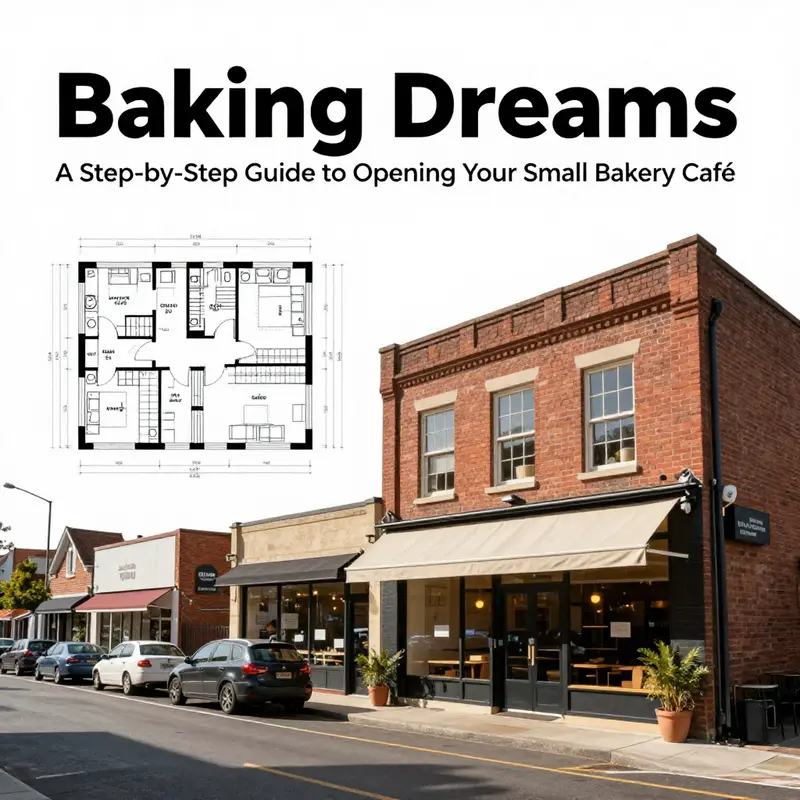
Choosing the location and shaping the space where your bakery café lives are not separate tasks. They are the first two chords in a melody that must resonate with daily customers who crave warmth, consistency, and a little taste of delight as they move through a busy day. The right spot does more than generate foot traffic; it frames your concept in real life. It whispers what you intend to serve, who you intend to serve it to, and how the experience will unfold from the moment a guest steps onto the threshold. When you begin to map this, you aren’t just looking for a storefront; you are drafting the stage for a routine—your daily ritual with the neighborhood. In practical terms, this means prioritizing areas with steady pedestrian flow, proximity to office clusters, universities, or vibrant shopping streets. It also means reading the local rhythm: what commute patterns shape the morning line, when students drift in between classes, and how families might linger on weekend brunch. A location’s personality should harmonize with your concept, whether you lean toward rustic bistro coziness or a bright, modern café that showcases a bakery’s craftsmanship in the display and the air around the ovens. The space you inhabit will amplify or diminish your menu’s promise, so a careful evaluation of the surroundings is essential. You will not only estimate potential sales but also assess how the environment supports your team’s daily tasks and your guests’ habits. The neighborhood context matters just as much as the space’s measured dimensions. A neighbourhood that already values artisanal goods, small businesses, or a coffee-forward lifestyle creates a receptive audience for your growth from day one. Beyond demographics, consider accessibility and visibility. A location with clear sightlines from the street, generous signage, and convenient parking or transit options lowers the friction of visiting your café. It reduces the effort guests must expend to choose you, which in the end influences how often they return. In a world where many people plan mornings around a quick coffee and a pastry, convenience becomes a compelling product in itself. Yet convenience should never feel transactional; it should feel thoughtful. If your building massing allows, a compact footprint can work beautifully, particularly in mixed-use developments or pedestrian-dominant corridors. Size matters less than the flow of people through it. A space that is too tightly packed will hoard staff movements and create bottlenecks during peak times. A space that is too large without a defined purpose risks feeling hollow, where patrons remain only brief, utilitarian stops rather than lingering chapters in a daily habit. The angular or free-flow layout described in design guidance offers a practical psychological and logistical framework for a small bakery café. An angular plan helps you maximize a modest footprint by guiding customers along a natural path—from entry to display to seating to the back-of-house, with sightlines that showcase your baked goods at every turn. The beauty of this approach is not merely aesthetic. It reduces crowding, shortens service distances, and fosters a rhythm that your team can anticipate. When you design the path, you must also design the sequence of interactions. The moment a guest enters, what is the first thing they notice? A well-lit display case with gleaming pastries can act as an invitation, while a clean counter and a friendly greeting set the tone for the rest of the visit. As guests move deeper into the space, the seating should feel intimate yet flexible, enabling solo workers to perch with a laptop and a coffee, while groups can gather around a small table for a quick bite and a conversation. The kitchen, front of house, and back-of-house zones must be evacuated of friction. A practical approach is to create a clear, one-way flow from receiving and prep to baking and assembly, then to service, with a discreet pass-through that allows staff to replenish display items without crossing guest traffic. This separation matters as much as the display itself. A well-coordinated layout reduces waste, supports consistent product quality, and makes the labor feel less strenuous. Even the order in which equipment is placed matters. The oven should sit near the drop-off zone that brings raw dough into production, while the cooling racks and display cases should be arranged so that a single staff member can monitor both the bake and the customer interface with minimal steps. The tangible feel of your space anchors your brand in the memory of visitors. Warm lighting, natural materials, and carefully curated display cases communicate craftsmanship before someone tastes a single bite. Lighting should be inviting rather than harsh, highlighting the textures of crust and crumb while ensuring staff can work with precision. The materials you choose—wood, stone, ceramic, or matte metal—should tell a consistent story with your branding, whether it leans rustic and artisanal or fresh and contemporary. Display design plays a central role in shaping behavior. A well merchandised lineup of breads, pastries, and savory items at eye level encourages impulse purchases and increases average order value. The display must be easy to replenish, easy to clean, and easy to view from multiple angles, including from the street if you have passersby peering in the window. A space that feels welcoming also has to feel practical. You should imagine yourself as both host and operator, forecasting how guests experience your café from the first step inside to the last bite of a pastry paired with a warm beverage. The spatial plan should respect local codes and safety standards, including clear exits, proper ventilation for an open kitchen, and the ability to accommodate service through glass or a pass-through where appropriate. Yet even as you adhere to regulations, you must preserve an atmosphere that invites lingering. Sit-down comfort might be modest, but it should feel thoughtfully arranged so people can settle into a moment—whether to read, meet a friend, or plan the next hour over a clinking cup and a flaky crust. The choreography of daily operation—how you receive ingredients, restock, and clean—must be embedded in the design so that the space never feels like a battle between supply and service. When you communicate through the space, you are signaling to staff and guests that your bakery café values care, reliability, and a bit of beauty in the ordinary. To that end, bring in a few design details that support this ethos without overwhelming the budget. Subtle texture, balanced color schemes, and a few well-placed decorative elements can evoke the artisanal heart of your baked goods while keeping the space legible and efficient. In the planning phase, you will test layouts through simple sketches, but you should also walk through the space with your team, performing a mental rehearsal of a morning rush. Ask: Do you feel the flow from door to display to seating is natural, or do you sense a bottleneck around the pastry counter? Are the rules around safety and sanitation simple for staff to follow, even when the café reaches capacity? These questions guide you toward a layout that remains functional as you grow. As you finalize the site, keep a single, clear message about who you are and what you offer, and let that message be reflected in the space. If a moment in your design process feels uncertain, revisit your core concept and check whether the space supports it. A well-chosen location coupled with a thoughtful, angular-free-flow layout becomes more than a place to buy bread; it becomes a small ritual people want to repeat. For additional practical grounding as you refine your ideas, you might explore a concise primer that captures the spirit of starting a bakery space and testing ideas before making a commitment. Hello World. Hello World. This kind of uplift can spark conversations with co-founders, designers, and future team members about how the space will support your future customers. And when you need a broader blueprint for planning a physical footprint, a respected external guide on floor plans and layout offers a detailed look at maximizing square footage while preserving intuitive flow. For further design insights, see the external resource: Small Bakery Kitchen Design Guide: Tips for Floor Plan & Layout.
Final thoughts
Embarking on the journey to open a small bakery café is as rewarding as the fresh goods you’ll create within its walls. Each step, from conducting effective market research to ensuring legal compliance and strategic space utilization, builds the foundation for your business success. As you blend your passion for baking with thoughtful planning and execution, remember that nurturing community engagement and adapting to customer preferences will propel your bakery café towards lasting success. Embrace the challenges, stay inspired, and watch your bakery dreams rise beautifully.