
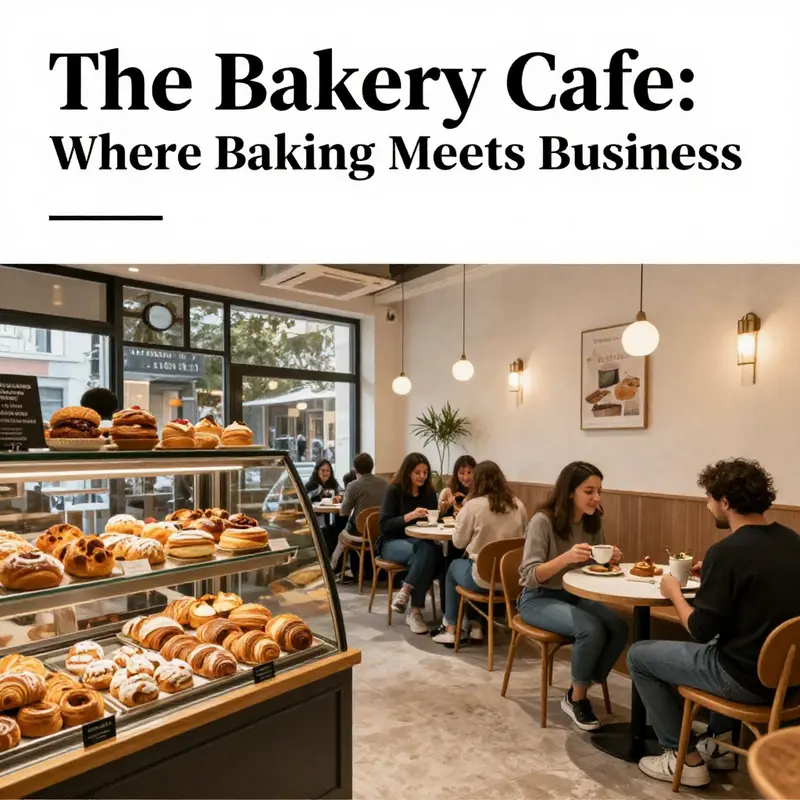
The bakery cafe represents a unique commercial dynamic—melding the artistry of baking with the culture of coffee in a space that nurtures community interaction. Business owners can leverage this fusion to create compelling customer experiences that resonate with diverse audiences. The first chapter will delve into the conceptual underpinnings of bakery cafes, illuminating how this hybrid format can enhance customer engagement and drive profitability. The second chapter will explore the global trends shaping bakery cafes, examining how local adaptations and cultural nuances contribute to their booming presence across the world.
Where Dough Meets Drip: Creating a Bakery Café as a Living, Scent-Driven Community Space
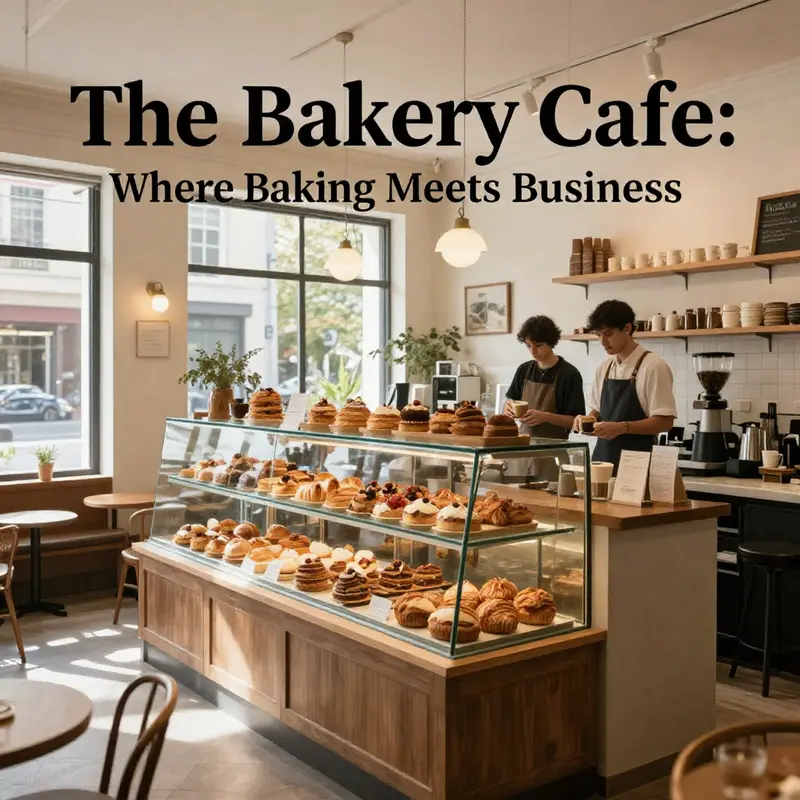
The bakery café is less a storefront than a living room that travels with the hours of the day. It is a quiet revolution in urban hospitality, a place where the ritual of baking and the ritual of coffee meet in the same breath and share a single curved glass display case of possibilities. The moment you push open the door, you are met first by aroma—the warm, yeasty perfume of dough waking, the slightly bitter perfume of roasted beans. Those scents are not simply stimuli for appetite; they are invitations to stay, to observe, to participate in a daily ritual that feels both intimate and expansive. The bakery café turns a morning routine into a theater of sensory cues: the clink of cups, the hiss of an espresso machine, the soft rustle of a pastry sleeve pulled from a paper bag. It is a space designed to be lingered in, whether you arrive with a laptop, a friend’s company, or a pocket full of quiet to think and breathe for a while. In this sense, the concept extends beyond nourishment; it becomes a place that nourishes time itself, a locale where the day’s schedule softens into a slower pace built around small, meaningful acts of consumption and conversation.
The atmosphere matters as much as the bread. The interior design of a bakery café often negotiates between several poles: the crisp efficiency of a modern coffee bar, the warmth of traditional bread displays, and the flexible zones that accommodate both solitary work and social gathering. Light pours in through large windows, sometimes filtered by airy blinds or warm-toned curtains that catch the steam rising from the oven below. Materials—wood, brick, matte metal, porcelain—work together to create a sense of hand-crafted solidity. The seating arrangements are deliberately varied: a row of counter stools that encourage quick exchanges and a corner with plush chairs for longer conversations, two different experiences under one roof. This intentional diversity of space allows the bakery café to function as a cross-section of daily life, a third place between home and work where people can slow down without fully stepping away from the world. It is here that the baked loaf, still warm from the oven, can be paired with a coffee whose roast profile invites you to linger and compare, to savor both the product and the moment of choosing.
Baking and brewing are not merely processes here; they are choreography. The kitchen becomes a stage, with bakers and baristas moving through routines that are precise yet fluid, as if rehearsed by habit rather than constraint. The morning bread service follows a cadence: the doughs rise in quiet fermentation while the beans roast in another room, their aromas weaving through air vents and into the dining area. A baker’s hands, dusted with flour, become a sign of care as they place a loaf on the cooling rack, a barista’s gloved fingers nudge a tamper, level the crema, and set a cup down with a speed that feels almost like music. The theater of the bakery—steam, crackling crust, the delicate crack of a golden crust giving way under a touch—meets the stage of coffee—grind, bloom, pour, and foam. Patrons become audience and collaborator at once; they choose and witness, and in that witnessing, they contribute to the bakery’s life. The product is not simply edible; it is part of an ongoing story about time, craft, and belonging.
In a global frame, the bakery café has grown from a simple cross-industry concept into a cultural phenomenon, especially in dynamic urban centers where appetite for both quality and convenience coexists with a craving for meaningful experiences. In cities like Shanghai, the fusion has evolved into a layered aesthetic and social practice. Western-style pastries meet espresso culture, but they do not do so in imitation. They blend with local tastes, aesthetics, and social rhythms. Interiors range from sleek, minimalist lines to retro-inflected warmth, creating spaces that feel both cosmopolitan and intimate. These venues function as social hubs, work-friendly environments, and informal galleries of daily life, reflecting a broader trend toward spaces that support connection, inspiration, and daily ritual as core offerings. The bakery café thus becomes a kind of cultural instrument, tuning the senses of the city to a rhythm that values quality, authenticity, and a sense of place.
For those who love to see this fusion in action, a quick tour of Shanghai’s bakery and coffee culture offers a compelling lens on how global influences and local identity converge. A recent pointer in the digital sphere—the TikTok snapshot titled Shanghai’s Best Bakery and Coffee Culture—captures the vibrancy and variety of spaces that invite both contemplation and conviviality. In that sense, the city’s landscape models a broader principle: when baking and brewing are thoughtfully integrated, a café becomes less a stop on a route and more a destination in a neighborhood, a place where strangers feel enough ease to share the moment and perhaps a suggestion about where to go next for a taste that matches the mood. The sensory ecology of the bakery café is not accidental but engineered through choices about scent, sound, color, texture, and the pace of service. A bakery display case is not merely a shelf of goods; it is a gallery of opportunities, with loaves that glow like amber and pastries that promise a memory worth pursuing.
In practice, the fusion is not just about products; it is about rituals and social meaning. A person may come for breakfast and stay for a mid-morning conversation, or they may slip in for a quiet hour with a laptop and discover that the act of writing is easier when the hum of early-day traffic and the cadence of a perfectly poured coffee acts as a kind of metronome. The bakery café’s value proposition rests on the belief that the best nourishment is not a singular sensation but a sequence of moments that accumulate into a sense of well-being. This means menus—though always anchored in bread, pastry, and coffee—are shaped to accommodate different tempos of life. A few plates might offer the warmth of a savory pastry, a lighter fruit-forward option, and a coffee or tea prepared with a method that invites curiosity. The approach is seasonal and adaptive, giving staff the room to experiment while maintaining the reliability that keeps customers coming back. A well-designed bakery café becomes a place where tradition and innovation exist side by side, where a classic baguette can occupy the same shelf as a pastry with a daring filling that nods to contemporary tastes, and where the coffee can be as comforting as a familiar scent yet as surprising as a new roast profile.
Beyond the interior and menu design, the bakery café becomes a platform for community and learning. Local partnerships with growers, roasters, or pastry artisans—while not named in this chapter as specific brands—often yield collaborations that emphasize transparency and education. Seasonal menus highlight what is fresh and locally available, while storytelling around ingredients invites guests to connect with the source of their food and drink. This is not only about taste but about a sense of ethics and place. Sourcing stories, when told softly in the dining room or on a chalkboard beside the display, deepen customers’ investment in what they consume and in the people who produce it. The space thus doubles as a learning environment where guests can observe the exchange between grain and oven, or between bean and brewer, and where conversations about technique become a shared culture rather than a private expertise. The café therefore becomes a civic space in microform, a place where daily bread and daily conversations can live in harmonious proximity.
The social and cultural dimensions of the bakery café are inseparable from its operational realities. The logistics of producing warmth at scale require thoughtful workflow, a well-tuned team, and a supply chain that respects both freshness and ethics. Baristas and bakers train together in the rhythms of peak service, building a common vocabulary that transcends their separate crafts. This cross-training cultivates a sense of mutual respect and a shared responsibility for guest experience. The energy of the room—its pace, its warmth, the friendliness of the service—reflects the ethos of the business: hospitality first, quality always, and community as a constant reference point. A café that prioritizes these values will see repeat visits not only for the bread and coffee but for the confidence that the venue will welcome you regardless of your mood, and that, within a few minutes, you may find yourself included in a larger story—one that reminds you that your daily routine can be both nourishing and dignifying.
The digital layer of the bakery café’s identity adds another dimension. In a world where social media shapes expectations as much as it shapes discovery, the aesthetic of bread, steam, and coffee becomes a shareable moment. The display, the glaze on a croissant, the crisp edges of a freshly baked baguette—these are micro-mgestures that invite photos, captions, and conversations online. The design language emphasizes not just visibility but readability: a guest should be able to understand what the space offers at a glance, even as they feel invited to linger and explore. The digital and physical experiences reinforce one another, turning a visit into a remembered moment that is later re-experienced in imagery and memory. In this way, the bakery café participates in a broader cultural dialogue about urban living, where the ordinary becomes extraordinary through attention to detail, atmosphere, and time well spent.
For readers exploring this model in practice, one option to consider in the continuum of bakery cafés is the Dulce Vida Café, a venue that embodies the blend of warm bread and thoughtful coffee culture. The link to the space’s profile offers a concrete example of how a venue can balance the craft of baking with the ritual of brewing, while also fostering a sense of community through comfortable spaces that invite conversation and quiet work alike. Dulce Vida Café serves as a touchstone within the broader narrative of bakery cafés: a reminder that the strongest iterations of this format fuse expertise, atmosphere, and human connection into a single, memorable experience. You can read more about this specific approach at the Dulce Vida Café site, where the language of craft and hospitality is made tangible in a way that resonates with the principles described here.
The bakery café is more than a business model; it is a social instrument that makes the daily act of eating and drinking feel intentional, restorative, and communal. It asks the city to slow down just enough for a person to recognize their own rhythms, to notice the scent of bread as a marker of time, and to savor the moment when a cup of coffee becomes the quiet catalyst for a conversation, a solution, or a new idea. In the end, the bakery café offers a simple truth: nourishment, in its most generous form, is a shared act. The bread you bite into, the coffee you sip, and the company you keep in that shared space become a microcosm of urban life—vibrant, imperfect, and deeply human. This is the heart of the concept explored in this chapter, a narrative that will continue to unfold as the world of food, space, and community evolves together.
External resource: https://www.tiktok.com/@shanghaicafes/video/7312345678901234567
Crust Across Continents: The Global Rise of Bakery Cafes and the Local Echoes They Create
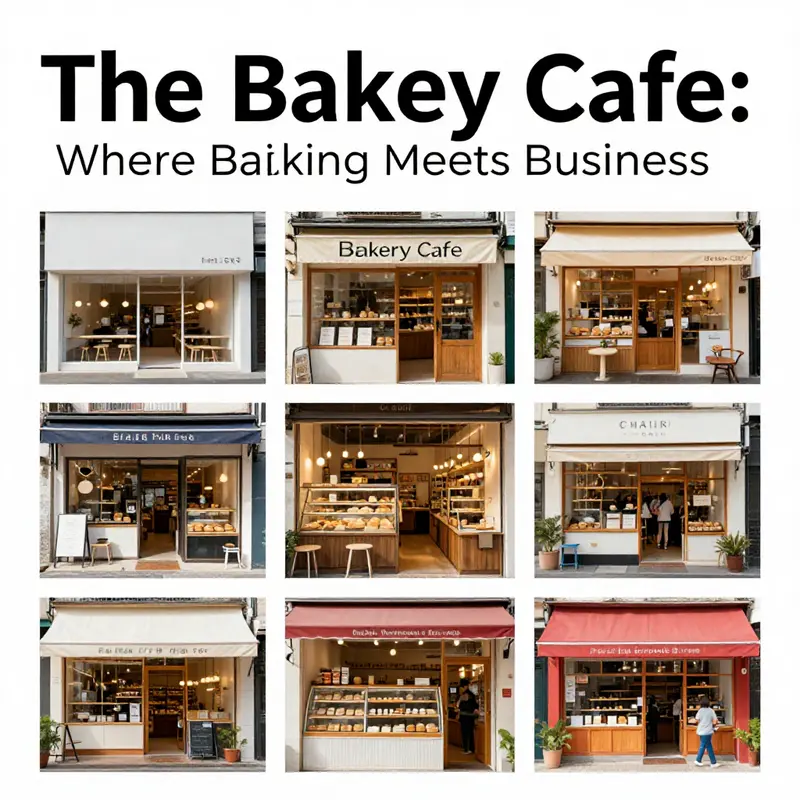
A bakery cafe is more than a storefront that sells bread and coffee. It is a hybrid space where culinary craft, social ritual, and urban hospitality mingle to shape daily life. The sight of a warm oven, the arc of steam rising from a dough, and the soft hum of conversation create a tentative rhythm for commuters, students, coworkers, and neighbors alike. In this context, the bakery cafe becomes a living room for the city, a place where the ordinary act of eating becomes a small, shared ceremony rather than a solitary routine. The form has traveled far from its European origins, yet its heart remains recognizably the same: a place to pause, taste, and connect, all under the welcoming glow of a warm, artisanal craft.
Origin stories are grounded in European sensibilities that treasure visible craftsmanship and the sensory language of baking. In cities with long-standing baking traditions, such as Paris, Vienna, and Berlin, pastry and bread were not merely sustenance; they were culture, memory, and daily ritual. The contemporary bakery cafe keeps that lineage alive by presenting the baking process as a visible performance. A customer can watch loaves being shaped, needles of steam lifting from the oven, and the careful plating of a pastry that glows with fresh glaze. This visible craft is more than spectacle; it builds trust. When people taste bread made from locally milled flour and seasonal ingredients, they sense a story they can follow from grain to crumb. The bakery cafe, then, carries forward a tradition of transparency and artisanship that translates well into the modern appetite for authenticity.
As the concept moved beyond Europe, it absorbed new social roles and architectural styles while retaining core elements: high-quality ingredients, a comfortable seating environment, and a menu that begins with breakfast and extends through afternoon hours. In North America, the bakery cafe increasingly positioned itself as a community space. It became a venue for informal gatherings—poetry readings, art displays, smaller lectures, and collaborative workshops—where the boundary between consumer and participant blurs. The cafe becomes a locus of cultural exchange, a place where people come not only for nourishment but also for the social energy that accompanies shared time. In this sense, the bakery cafe morphs into a flexible cultural instrument, capable of supporting both individual work and collective leisure within the same physical space.
Across Asia, the model has been adapted to reflect local aesthetic ideals and dining practices. In Japan, the architecture often emphasizes minimalism, precision, and quiet efficiency. The design and the service pace reinforce a sense of care and contemplation, inviting patrons to linger with a book, a notebook, or a conversation that unfolds over a carefully brewed cup. In Southeast Asia, bakery cafes have embraced tropical flavors and the richness of local ingredients, weaving regional identity into Western techniques. The result is a hybrid menu that respects both origin and place, offering a sense of novelty without sacrificing familiarity. In India, the blend is equally inventive, where modern formats meet cherished sweets and traditional dessert influences in ways that feel contemporary and connected to local eating patterns. By weaving regional tastes into a recognizable bakery cafe framework, operators create experiences that feel both global and intimately personal.
A through line in these adaptations is a commitment to provenance. Consumers increasingly want to know where their bread comes from, who grew the grain, and how it was milled. This insistence on provenance is not simply about ethics; it is about storytelling. A bakery cafe that can trace flour from a nearby field to the oven in the open kitchen offers a tactile sense of trust. It invites customers to imagine the journey of an ordinary loaf, the seasons that shaped it, and the hands that guided it from dough to crumb. In practice, this translates into practices such as partnerships with local mills, seasonal menus, and transparent sourcing notes displayed near the counter. The sensory experience—aroma, texture, and the visual display of ingredients—becomes, in effect, the narrative that connects the eater to the land and the maker. The emotional tie strengthens the bond between the customer and the brand, turning a simple purchase into a moment of meaning.
Sustainability has joined provenance as a central pillar of the bakery cafe philosophy. Eco-conscious operations—zero-waste initiatives, compostable or reusable packaging, energy-efficient ovens, and careful waste management—have become standard expectations for many customers. These practices reflect a broader shift toward mindful consumption, where efficiency and responsibility are integrated into everyday hospitality. A kitchen that minimizes waste by repurposing leftover doughs, a storefront that encourages refilling and reuse, and a dining room that emphasizes durable, stylish materials all contribute to a sense of stewardship. In addition to environmental considerations, these spaces often secede to design that promotes comfort, quiet focus, and social connection. The result is a venue that feels both modern and rooted, attractive to freelancers seeking a productive corner and to groups seeking a relaxed meeting place.
If the global movement is defined by its universal appeal to freshness, comfort, and craft, it is equally defined by the way it negotiates place. Local identity does not simply endure; it thrives through adaptation. A bakery cafe in a major metropolis embodies an urban identity that is both cosmopolitan and specific, weaving together global techniques with locally resonant flavors, rhythms, and aesthetics. In this sense, the chain-like precision of a bakery cafe can coexist with neighborhood warmth and distinctive soundscapes—the chatter of a market street, the clatter of a corner cafe, the soft clink of cups during a lull between peak hours. The concept becomes a cultural ecosystem rather than a one-size-fits-all model. It is a place where people come for nourishment, but also for a sense of belonging and daily continuity in a city that can feel alienating. The bakery cafe, in its most successful form, offers a consistent yet flexible ritual: a moment of calm before or after a busy day, a space for quiet focus, a backdrop for conversation, and a shared commitment to well-made food and drink.
For readers curious about how these global tides echo in different communities, the practical note is that local operators often use the same blueprint while letting the surroundings dictate the flavor. A bakery cafe becomes a social stage where regional identity is performed through ingredients, design language, and community programming. This is not merely about copying a foreign concept; it is about engaging people in a familiar ritual while inviting them to discover something new in a familiar form. To glimpse how networks of bakeries extend their reach and connect communities, explore the local dimension of bakery networks that serve nearby neighborhoods and towns. See panaderías cercas de mi for a sense of how a simple search for nearby bread can translate into a localized, socially oriented bakery ecosystem. panaderias cercas de mi
The trajectory of bakery cafes, then, charts a careful balance between global standards and local flavors. It foregrounds craft, transparency, and community while honoring the evolving expectations of a diverse, urban audience. Customers enter not merely to purchase sustenance but to participate in an ongoing conversation about where food comes from, how it is made, and why it matters. The physical spaces—bright, open, and bathed in natural light—invite lingering and observation, turning bakers and baristas into friendly guides who illuminate the craft behind a crust and a cup. In this sense, the bakery cafe is a microcosm of urban life itself: a place where craft, commerce, curiosity, and companionship meet. The result is a restaurant format that remains endlessly adaptable, capable of reflecting a city’s history while shaping its future through small, daily acts of hospitality.
External reference and further reading can illuminate these patterns from a broader lens. Scholars and market observers point to sustainability, provenance, and community as enduring accelerators of the bakery cafe model, arguing that these elements will continue to drive growth and differentiation. For a compact overview of the broader economic implications and trends shaping this global movement, see the recent industry analysis linked here. https://www.bbc.com/news/business-68543217
Final thoughts
The growth of bakery cafes illustrates a pivotal trend in consumer culture, where the duality of quality baking and coffee can captivate diverse customer bases. By embracing the bakery cafe model, business owners can cultivate rich environments that foster creativity, community interaction, and ultimately, customer loyalty. The integration of local flavors and global trends ensures that bakery cafes remain dynamic and adaptable, providing a sustainable business model that aligns with contemporary consumer preferences.