
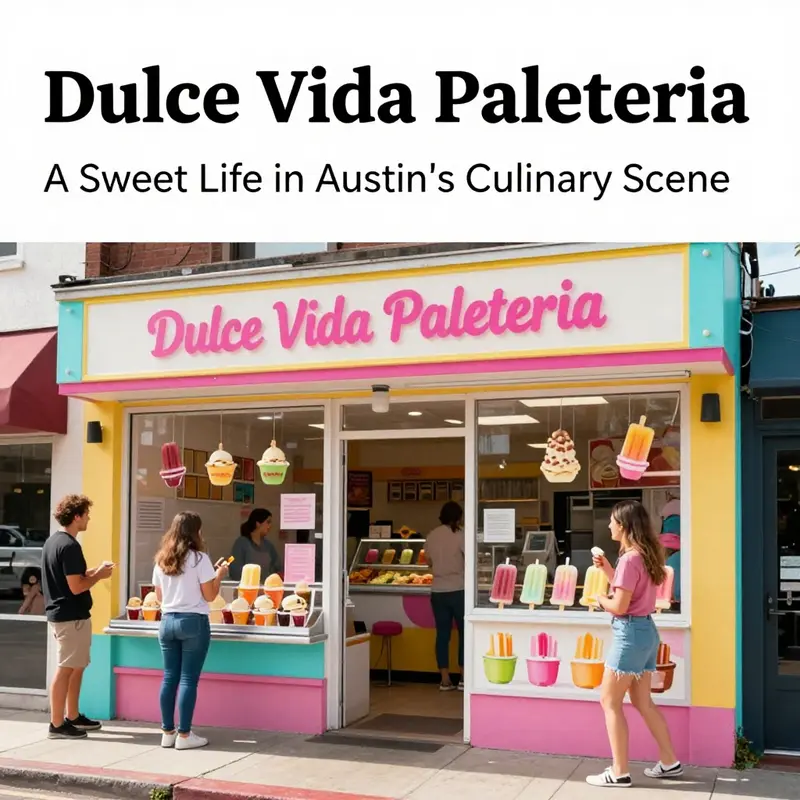
Nestled in the heart of Austin, Texas, Dulce Vida Paleteria stands as a vibrant emblem of indulgence and cultural heritage. As a popular ice cream shop, it has captured the imagination of food lovers and social media enthusiasts alike, especially on platforms like TikTok. Drawing inspiration from the phrase ‘dolce vita’, which signifies a life of pleasure, Dulce Vida creates an inviting atmosphere that celebrates both flavors and community. This article delves into the cultural significance of Dulce Vida Paleteria, explores its unique culinary offerings, and examines its economic impact and community engagement, showcasing how it transcends mere dessert and becomes a pivotal part of Austin’s lively food landscape.
Sweet Life, Shared Stories: How Dulce Vida Paleteria Weaves Mexican Heritage into Modern Austin
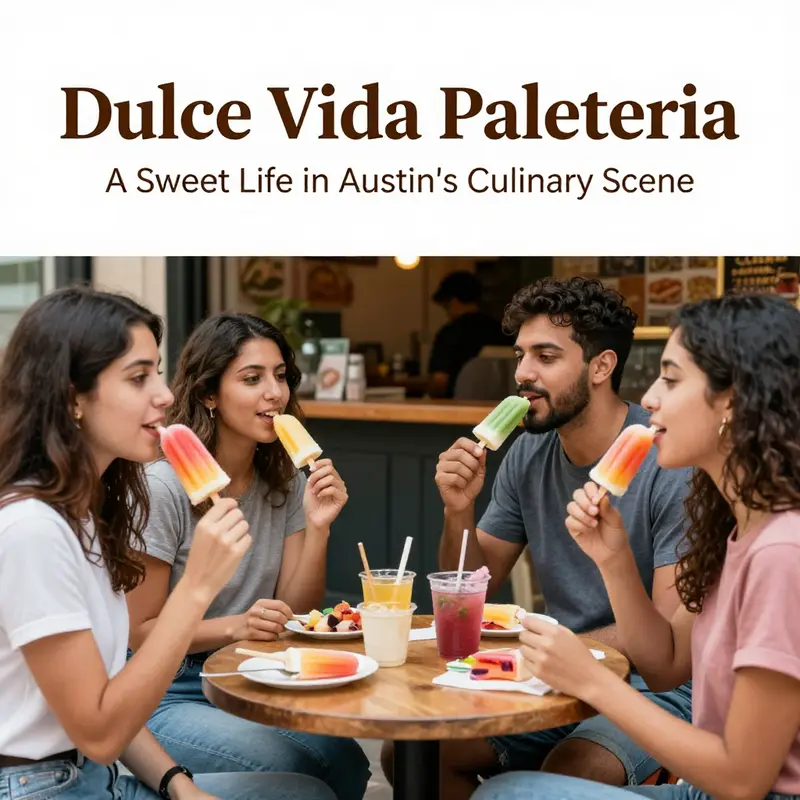
In the heat of a Texas afternoon, a small storefront glows with inviting colors of fruit and flower—a doorway into a space where the warm hum of conversation and the clink of spoons cue a slow, deliberate pleasure. Dulce Vida Paleteria stands at that threshold, not merely selling ice-cold treats but inviting a community to pause, breathe, and remember. The name itself gestures toward a familiar idea: the sweet life, a life of leisure and delight, transposed from its European roots into a Mexican American sensibility that makes everyday moments feel ceremonial. This shop embodies that sensibility, blending memory and experimentation in a way that turns a simple dessert run into a ritual of belonging. It is not hard to imagine why the place becomes a magnet for both longtime locals and curious visitors who want to understand a neighborhood’s pulse through its flavors, textures, and the pace of the street outside.
What makes Dulce Vida Paleteria a focal point for cultural conversation goes beyond the sugar and color on the display case. It functions as a living archive of a shared culinary language, where paletas—cool, handheld canvases for fruit, cacao, and surprisingly nuanced spice blends—are more than snacks. They are edible memories, capable of evoking childhood kitchens, street stalls, and family gatherings that stretch across generations. A TikTok video from April 2024 captured La Paletería not as a storefront alone but as a vibrant cultural space where music, conversation, and the scent of lime and vanilla mingle with stories of fiestas, weekend rituals, and the everyday acts of care that stitch a community together. In those moments, the shop becomes a forum for dialogue about heritage, migration, and the ways in which cuisine carries identity across time and across borders. The sensory experience—the bright hues, the chill in the air, the snap of a fresh wafer—offers a language that words sometimes fail to capture, allowing people to speak with their senses when they struggle to find the right phrase.
The significance of Dulce Vida Paleteria grows from its role as a gathering place where all ages contribute to a living tradition. Families come to celebrate birthdays or simply to share a late-afternoon treat, while elders reminisce about flavors they first encountered in neighborhoods far from this city. Children learn to narrate their own stories in a language that blends Spanish, English, and the playful slang of street markets, and in doing so, they inherit a sense of rootedness even as they drift toward new futures. Festivals, rituals, and seasonal occasions—such as Day of the Dead commemorations or neighborhood street fairs—feel more intimate when anchored by a shared dessert, a moment of pause that invites conversation about memory, belonging, and the evolving texture of community life. The shop’s everyday offerings reinforce this dynamic: a spectrum of artisanal frozen treats crafted with an eye toward nostalgia and a palate open to modern twists, which makes the act of choosing flavor feel like choosing a story to tell. In this way, Dulce Vida Paleteria becomes a microcosm of urban life: a place where tradition and change meet, and where the act of eating becomes a doorway to cultural understanding.
A broader trend in whom these spaces attract—families, students, tourists, artists—speaks to the elasticity of cultural identity in contemporary cities. The paletería format, long a staple of Mexican street life, has found an adaptive home in urban centers that crave authenticity paired with innovation. Some shops reflect this by adopting stylistic inspirations from other beloved cultural touchstones, proving that tradition can be a starting point rather than a finale. The result is a landscape in which people encounter familiar flavors in unfamiliar forms, strengthening cross-cultural curiosity while preserving a sense of place for those who carry memories tied to the original tastes. This is the balance that sustains relevance: honoring what came before while welcoming new interpretations that reflect a diverse, evolving community. As more visitors discover Dulce Vida Paleteria through social media and word of mouth, the conversation extends beyond the immediate block, inviting outsiders to read a neighborhood’s history through the sweetness of its offerings. In this sense, the shop becomes a conduit for dialogue about identity, migration, and the ways in which food can anchor a community across generations and geographies.
The interconnectedness of traditions and urban life is also visible in the way these spaces position themselves within the broader ecosystem of Latin American culinary culture. They stand alongside other vibrant neighborhood hubs that adapt classic forms to contemporary tastes while keeping a firm hold on memory and craft. The result is a dynamic cultural economy: local employment, neighborhood revitalization, and an invitation for a wider audience to engage with authentic flavors that carry a sense of origin. For readers curious about how such spaces relate to a larger network of Latin flavor and bakery culture, one can explore related conversations and contemporary expressions in nearby Latin bakeries, where the shared spirit of craft and community persists across different formats. See broader discussions here: Latin bakeries near me.
For those who want to glimpse the cultural heartbeat of this phenomenon, the TikTok snapshot mentioned earlier offers a concise window into the social life surrounding the shop—how it looks, sounds, and feels when a community gathers around a cold treat on a warm day. It is a reminder that modern urban culture can still be nourished by simple rituals that reach across generations. Dulce Vida Paleteria, in its own quiet, delicious way, models how a single storefront can become a space of memory, learning, and care—a living example of the sweet life that communities claim together.
Dulce Vida Paleteria: A Culinary Exploration of Flavor, Craft, and Cultural Tradition
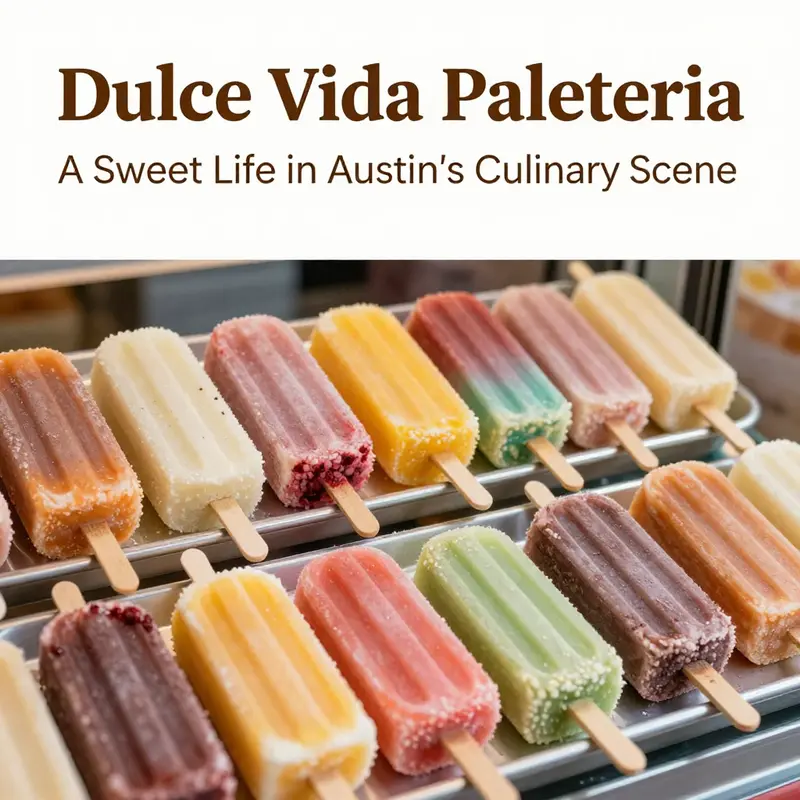
Dulce Vida Paleteria sits in the buzzing tapestry of Austin as more than a storefront; it is a doorway into a tradition that travels with the heat of summer and the rhythm of markets. The name itself—an echo of a celebrated phrase meaning the sweet life—invites visitors to pause, savor, and feel a moment of carefree indulgence in a city known for its fusion of food cultures. In this chapter, the shop becomes less a place to buy a frozen treat and more a small, living archive of Latin American culinary craft, where the edible becomes a bridge between generations and geographies. The storefront’s simple exterior belies the warmth inside, where colors, sounds, and the scent of fresh fruit mingle. The space feels almost ceremonial, as if the act of choosing a frozen treat is a nod to memory, family, and shared moments that define a community.
At the heart of the experience is a promise of quality and authenticity. The paletas—the frozen fruit pops that line the display—are more than dessert; they are hand-crafted artifacts shaped by time-honored techniques and the care of hands that have learned through practice. Each pop is assembled from ingredients chosen for brightness of flavor and purity of expression, a testament to how the simplest ingredients can be transformed with restraint and respect. No matter the season, the palate is treated to a spectrum of options that range from the familiar to the adventurous, all conceived to honor the regional heritage at the core of the shop’s identity. The craft rests on everyday rituals: peeling fruit at its peak, balancing sweetness with acidity, and freezing with a patience that allows the fruit’s natural character to shine through. This is not a marketing pose but a lived tradition in which flavor is a storytelling device and the palate becomes a map for cultural memory.
The physical environment amplifies this sense of tradition. The shop’s interior nods to the bustling markets of Mexico City and Guadalajara, where color, craft, and communal sharing are daily life. Hand-painted paleta molds line a wall like a gallery of tiny sculptures, serving as a reminder that what arrives on the stick is the product of careful artistry. The ambient hum of conversation, the clink of spoons, and the soft percussion of street sounds that drift through the door help situate the palate’s journey within a broader cultural experience. The atmosphere is welcoming and unpretentious, inviting regulars and newcomers alike to linger, watch the creators at work, and ask questions about ingredients and methods. In this context, the paleteria becomes a microcosm of a life that values craft, community, and the joy of sharing something sweet with others.
What makes Dulce Vida particularly resonant in a city like Austin is how it builds a bridge between place and memory without relying on spectacle. The flavors, though dynamic, are anchored in regional sensibilities that respect both tradition and modern curiosity. The dialogue around flavor is not about novelty for novelty’s sake; it is about how familiar notes—whether that sense of tart brightness, tropical sweetness, or earthy depth—can be recombined to evoke places and moments that matter. The experience is enhanced by a sense of process: a careful mise en place, respect for seasonal availability, and a quiet pride in producing something that feels both timeless and personal. In this way, the paleteria participates in a larger conversation about food as heritage, place, and identity.
Beyond the counter and the flavors, the shop’s presence on social media amplifies this narrative. TikTok and other platforms have helped Dulce Vida reach a broader audience, inviting viewers to glimpse the artistry behind each frozen creation and to celebrate the small rituals that accompany a visit—sharing, savoring, and the casual joy of discovering a new flavor that still feels deeply familiar. The social presence does more than showcase product; it communicates a philosophy: life is sweeter when shared, when crafted with care, and when rooted in place and memory. It is this philosophy that resonates with many who seek authenticity in a city that continually redefines itself, and it is a reminder that a simple treat can be a meaningful encounter with culture, history, and community.
Historically, paleterias have served as communal hubs, spaces where family and friends gather to mark the ordinary and the extraordinary with a frozen indulgence. Dulce Vida’s approach echoes this tradition while adapting it to a contemporary urban environment. The result is a setting where the past is felt in the craft and the present is enjoyed in the moment, a blend that makes the experience feel timeless rather than nostalgic. The ambiance, the craft, and the flavors together cultivate a sense of belonging—an invitation to slow down, consider the origins of what we eat, and celebrate the sweetness of life that every culture, at its best, aspires to share. For readers exploring the broader landscape of Latin culinary culture, the experience at this paleteria offers a compact, tangible example of how food can serve as a catalyst for cultural exchange and personal delight.
The connection to tradition, the emphasis on quality ingredients, and the careful orchestration of space and service all reinforce the central idea that the “sweet life” is best lived through moments of shared flavor and mindful craft. In this way, Dulce Vida Paleteria becomes more than a neighborhood staple; it becomes a living node in a network of culinary memory—one that invites visitors to participate, taste, and carry a bit of Latin American heritage with them long after the last bite. Those who walk in may not know the exact lineage of every technique, yet they leave with a sense that they have witnessed a lineage in progress—one that values flavor, community, and the enduring appeal of a life made sweeter through respect for craft and culture. For anyone curious about the broader world of Latin-inspired bakeries and dessert traditions, this paleteria offers a thoughtful entry point that honors the past while inviting ongoing discovery. External resource: https://www.google.com/maps/place/Dulce+Vida+Paleteria/@30.284962,-97.748376,17z/data=!3m1!4b1!4m6!3m5!1s0x864c2d5a8d6e3f5f:0x4f5c5c8d7e5c8d7e!2sDulce+Vida+Paleteria!3m2!1d30.284962!2d-97.748376!5m2!1s0x864c2d5a8d6e3f5f:0x4f5c5c8d7e5c8d7e
Sweet Pulse of the Neighborhood: The Economic and Social Lifeblood of Dulce Vida Paleteria in Austin
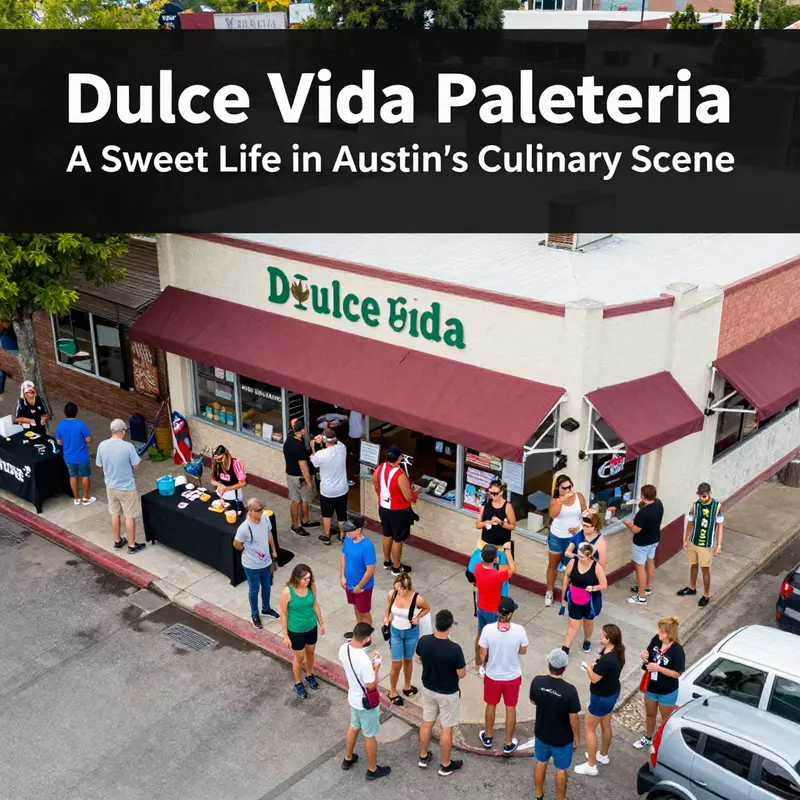
In the heart of a quiet Austin neighborhood, Dulce Vida Paleteria is more than a storefront; it is a small, locally owned anchor that shapes daily life. The first layer of its impact is employment: staff members, many local residents, gain steady hours, learn the rhythms of customer service, and take pride in contributing to a place residents look forward to each week. The line of customers around the stand signals a sustainable pattern of demand that supports families and weaves into weekly routines. The stand’s cadence—seasonal flavors inviting curiosity, a warm greeting, and a shared moment of a treat—coheres into the texture of the neighborhood’s economy.
A core piece of Dulce Vida’s story is its sourcing: prioritizing local suppliers shortens supply chains and reduces transport costs while building trust and mutual support that help weather market fluctuations. This translates into fresher ingredients, flexible inventory, and the ability to respond quickly to tastes. It creates a broader network of local farms, makers, and service providers who rely on everyday foot traffic the stand generates.
Money circulates within the community as residents choose the stand over impersonal chains. The dollars spent on a paleta become wages for staff, purchases for suppliers, and spillover to nearby cafés and markets, reinforcing the vitality of the street. Beyond economics, the stand cultivates social life: familiar faces, quick conversations, and a sense of belonging that turns a visit into a small ritual and a shared memory in the making.
Branding and cultural resonance also matter. The name signals leisure and delight, inviting locals and visitors to participate in a communal moment. The stand’s online presence extends its reach while grounding itself in local action: dependable jobs, locally sourced ingredients, and a space where people connect over taste and story.
For readers curious about how local, Latinx-led food venues fit into Austin’s economy, Dulce Vida sits within a wider tapestry of neighborhood networks that prioritize belonging and resilience. Taken together, the economic and social dimensions show how a small stand contributes to a livable, vibrant, and inclusive urban fabric. A future chapter could explore how shifts in demographics and tastes test tradition and openness to novelty, and how Dulce Vida adapts while staying rooted in community.
External context notes: this chapter connects to broader conversations about local economies and consumer culture in Texas.
Final thoughts
Dulce Vida Paleteria transcends the ordinary, becoming a cultural institution that unites flavors, community, and tradition in Austin. Its impact ripples beyond simply selling ice cream, contributing to local economy, fostering social engagement, and celebrating cultural heritage. The shop’s clever branding and innovative offerings resonate deeply with customers, cementing its status as a beloved destination. For business owners and entrepreneurs, Dulce Vida illustrates the power of culinary creativity combined with cultural appreciation, showcasing the value of community connection in building a successful enterprise.